
REVIEW · QUEENSTOWN INDOOR FUN AND GAMES
Kiwi Park Queenstown Admission
A kiwi at night feels like a small miracle.
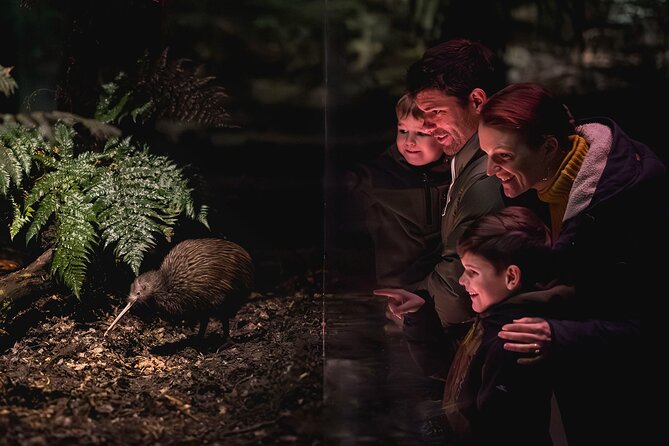
Kiwi Park Queenstown is one of those rare spots where you get real kiwi viewing and a smart complimentary audio tour in the middle of town, not out in the wilderness. The park’s 5-acre bush setting means you can watch birds and learn about conservation at a calm pace. The one thing to plan for is the kiwi enclosure is extremely dark, so you need a little patience for your eyes to adjust.
This is also a practical rainy-day plan. With an all-day ticket, you can time your visit around keeper talks and the scheduled Conservation Show, instead of racing the clock. And because it is central, you can fit it around gondola time and still have energy left for Queenstown dinner.
Key highlights you will actually use

- All-day admission lets you come, wander, and catch the kiwi and shows without rushing
- Kiwi Encounters in a darkened enclosure can be magical once your eyes adjust
- Conservation Show with free-flying birds happens several times daily in netting
- Tuatara Encounter gives you a close look at a prehistoric lizard
- Audio guide at your own pace helps you connect exhibits to real conservation work
- Central Queenstown location makes it easy to add even if your weather changes
Kiwi Park Queenstown in one glance: what makes it worth your time

Kiwi Park Queenstown (Kiwi Birdlife Park) is a family-friendly wildlife park on about 5 acres, right in central Queenstown. Your admission includes a self-paced audio tour, plus access to kiwi viewing and a Conservation Show, with the whole experience designed around how you see New Zealand’s native wildlife up close.
What I like most is the way the park manages expectations. You are not just looking at animals behind glass. You are using audio, scheduled presentations, and special viewing spaces, so the visit feels like a guided experience even when you are walking on your own.
The second big plus is variety. You can see more than 20 native bird species, plus the tuatara lizard. And if your main goal is kiwi, the park puts them in the spotlight with nocturnal-style viewing, not daytime guessing games.
Price and value: what $39.72 buys you in real time
At about $39.72 per person, Kiwi Park is not a “quick peek” attraction. It is priced like a full, story-led wildlife visit, and that is exactly what you should expect to get.
Plan on about 2 to 3 hours for a relaxed circuit that includes at least one Conservation Show and one kiwi viewing session. What makes the value feel better is the all-day ticket, so if you arrive early, grab a coffee, wander, then return for a specific keeper talk time, you can do that without feeling trapped.
Here is how I would judge value for you. If you want one kiwi sighting, one quick talk, and you are out, it might feel small for the price. If you care about understanding why the animals are there, plus seeing multiple sections of the park, it tends to feel like a fair trade.
Finding Kiwi Birdlife Park: central Queenstown convenience that matters
One reason this place works is location. Kiwi Park sits in Queenstown’s core and is easy to reach from major visitor areas. In practical terms, you can pair it with gondola time without building a whole day around transport.
You do not get hotel pickup, and parking is not included. That does not sound dramatic, but it changes how you plan your arrival. If you are not staying central, you will want to budget a little time for walking or local transport, so you still make the scheduled parts.
Also note the park is open daily, with hours listed as 9:30 AM to 5:30 PM during the long operating date range shown. That wide window gives you flexibility if you are dealing with weather, or if your Queenstown day starts slow.
Using the complimentary audio tour: make it feel guided

Your admission includes a complimentary audio tour you can explore at your own pace. This is not just “background information.” It is built to help you move through the park with context, so you know what you are looking at and why it matters.
I suggest you use the audio tour in short bursts, not as one long thing. Take it while you approach key exhibits, then pause for the animal moment. That way you are not stuck reading your phone while birds wander on.
Reviews highlight that the audio setup can be kid-friendly too, with language support mentioned like Mandarin audio equipment. If you are traveling with kids, that kind of flexibility is a real quality-of-life detail.
Conservation Show with free-flying birds: the schedule you should build around

The Conservation Show is one of the most useful parts to time your day around. It takes place in an outdoor area enclosed in netting, so you get the feel of birds flying freely while still keeping it safe and controlled.
Depending on the season, it runs about two or three times daily. The listed times are:
- Oct to April: 11:30 AM, 1:30 PM, 3:30 PM
- April to Sep: 11:30 AM and 3:00 PM
This show is where you get birds that you would otherwise struggle to spot in the wild. Highlights named in the park description include the kakariaki (a parakeet) and the kereru (a New Zealand pigeon). In other words, this is not just entertainment, it is a fast education on what lives in New Zealand.
One practical tip: if you can, try to start your visit with the show. It gives you names, habits, and conservation context before you go off exploring at your own pace. Then when you see the animals later, it feels more like learning than wandering.
Tuatara Encounter: the prehistoric lizard moment

If birds are your main goal, the tuatara Encounter is a great bonus. The park describes this as a close contact experience with a prehistoric reptile sometimes called a living dinosaur.
This is one of those stops that can break up the rhythm. Instead of only “look and listen,” you get a different kind of attention moment, which is especially helpful if you have kids who need a change of pace every so often.
You should also think of the tuatara Encounter as part of the park’s wider mission. New Zealand conservation is not only about kiwi. It is about protecting unique wildlife across species, and this is a visible example of that broader story.
Kiwi Encounters: timing your visit for the best odds

Now for the reason many people come. Kiwi Encounters are held multiple times each day, and they are timed because kiwi activity is tied to their nocturnal routine.
The listed Kiwi Encounters times differ by season:
- Oct to April: 10:00 AM, 11:00 AM, 12:15 PM, 1:00 PM, 2:15 PM, 3:00 PM, 4:15 PM, 5:00 PM
- May to Sep: 10:00 AM, 11:00 AM, 12:15 PM, 1:00 PM, 2:00 PM, 3:45 PM, 4:43 PM
If your goal is to see kiwi with the least stress, aim for one of the earlier sessions. Early in the day gives you time to adjust to the darkness and still enjoy the rest of the park afterward.
And keep your expectations realistic. The kiwi enclosure is purposely dark so the birds can behave naturally. That means you might start out seeing outlines or shadows before your eyes adjust. Once you adapt, that same darkness turns into the point of the experience.
Inside the nocturnal kiwi viewing: what you will actually notice

The Kiwi Encounters section is built around nocturnal enclosures meant for optimal viewing. The description includes kiwi feedings and a look at how flightless birds use underground burrows and sleep during daylight hours.
This is where the park feels different from typical zoo viewing. You are not just watching an animal. You are watching a conservation story performed in the conditions kiwi are used to.
A key detail is that you learn about the underground habits, not just the cute face. Flightless birds have adapted in ways that make them vulnerable. Understanding those habits is what helps you connect the sighting to the reason the park exists.
If you are the type who likes small behavioral clues, watch for movement patterns. Kiwi are not always instantly obvious, and the enclosure lighting is designed to help their natural activity show up, not to make viewing easy on day one.
More native birds and a forest walk that isn’t just filler
Between shows and kiwi viewing, you will wander native bush exhibits. The park description mentions a forest walk past trout-filled streams and information about conservation efforts like rehabilitation of injured wildlife and breeding of kiwis for release in the wild.
This matters because it keeps you from treating the visit like a single-ticket mission. Instead of only waiting for your kiwi slot, you get a fuller sense of what life is like for New Zealand birds and reptiles.
You will also encounter additional species beyond kiwi and tuatara. Kea is specifically mentioned in one review as a favorite exhibit, and the broader park description highlights over 20 native bird species. Expect a mix of education panels and animal viewing zones.
One thing to know for planning: paths can have some slope. That can make the walk harder for mobility issues, though the park is described as most travelers can participate. So if you have limited mobility, wear supportive shoes and go slowly.
How long should you plan, and what order makes sense
Most people do not need a full day here. 2 to 2.5 hours is a common practical target if your focus is kiwi plus at least one show.
Here is a simple order that works well:
- Start with the Conservation Show if the timing fits
- Do the Tuatara Encounter and bird exhibits while you have daylight
- Then go to Kiwi Encounters so you can adjust to the dark and watch feedings
If you arrive during a busy time, you might want to check your next kiwi and show time right away, then use the audio tour while you wait. With an all-day ticket, you can re-time without losing money if the first slot does not line up with your pace.
What you are supporting: conservation that feels tangible
This park is not only about seeing kiwi, it is about helping protect them. The description says the park handles rehabilitation of injured wildlife and breeding of kiwis for release.
When you combine that mission with the nocturnal kiwi viewing and scheduled conservation presentations, it makes the experience feel more purposeful. You are not just entertained, you are given a reason to care about what you see.
I also liked that the park includes keeper presentations and nature exhibits throughout the grounds. It makes conservation education feel like part of the visit, not something tacked on at the end.
Should you book Kiwi Park Queenstown admission?
If kiwi is on your New Zealand hit list, I think this is an easy yes. It is one of the most direct ways to see kiwi up close in a setting designed for nocturnal viewing, and you get included audio plus a Conservation Show without extra tickets.
Book it if:
- you want a central Queenstown activity that works even when the weather turns
- you like wildlife education, not only animal photos
- you are traveling with kids and want a structured experience with named moments
Skip it or reconsider if:
- you are only after a quick kiwi sighting and do not want to spend time adjusting to darkness
- you are on a super tight budget and need more wildlife per dollar than this park offers
- you need very easy walking routes and do not want to handle slopes on a bush path
If you go in with the right plan, you will come out with more than a photo. You will leave with a clearer sense of why kiwi matter, and you will have seen them in the conditions they actually prefer. That is rare.
FAQ
How long does Kiwi Park Queenstown admission take?
The experience runs about 2 to 3 hours (approx.). You can also explore at your own pace using your all-day admission ticket.
Is the ticket valid for the whole day?
Yes. Your admission ticket is valid for the entire day, so you can fit Kiwi Encounters and the Conservation Show into your schedule.
What is included with the admission price?
Included items are the audio guide, kiwi viewing, and the Conservation Show.
Are there wildlife shows included in the ticket?
Yes. The Conservation Show is included, and it is held two or three times daily depending on the season.
What times are Kiwi Encounters?
Kiwi Encounters run multiple times per day and change by season. For Oct to April, listed times include 10:00 AM, 11:00 AM, 12:15 PM, 1:00 PM, 2:15 PM, 3:00 PM, 4:15 PM, and 5:00 PM. For May to Sep, listed times include 10:00 AM, 11:00 AM, 12:15 PM, 1:00 PM, 2:00 PM, 3:45 PM, and 4:43 PM.
What times are the Conservation Shows?
For Oct to April, the listed Conservation Show times are 11:30 AM, 1:30 PM, and 3:30 PM. For April to Sep, the listed times are 11:30 AM and 3:00 PM.
What are the park hours?
The opening hours listed are Monday to Sunday from 9:30 AM to 5:30 PM.
Is parking or hotel pickup included?
No. Hotel pickup and drop-off are not included, and parking is also not included.
Can I cancel for a refund?
Yes, you can cancel for free up to 24 hours in advance for a full refund. If you cancel less than 24 hours before the experience start time, the amount paid is not refunded.
More Tour Reviews in Queenstown
- Queenstown: Walter Peak Gourmet BBQ & Lake Whakatipu Cruise
★ 4.8 · 2,713 reviews - Queenstown: Milford Sound Coach & Cruise Full-Day Trip
★ 4.7 · 2,592 reviews - Shotover River Extreme Jet Boat Ride in Queenstown
★ 5.0 · 2,540 reviews - Small Group, Award Winning Milford Sound Day Experience & Cruise
★ 5.0 · 2,416 reviews
For the Low-Cloud Days
- Queenstown: Minus 5 Ice Bar Experience with Drink Options
★ 4.7 · 592 reviews - Fear Factory Queenstown
★ 4.5 · 248 reviews - Queenstown: Ice Bar Entry with Warm Winter Gear and Drink
★ 4.8 · 162 reviews - Kiwi Park Admission Ticket
★ 4.5 · 118 reviews
Queenstown Indoor Fun and Games, side by side.
 ★ 4.7Minus 5 Ice Bar Experience with Drink OptionsFrom $29592 reviews
 ★ 4.5Fear Factory Queenstown248 reviews
 ★ 4.8Ice Bar Entry with Warm Winter Gear and DrinkFrom $35162 reviews
 ★ 4.7Wanaka: Combo Entry to Puzzling WorldFrom $19153 reviews
 ★ 4.5Kiwi Park Admission TicketFrom $35118 reviews
 ★ 4.5COMBO Admission: Puzzling World, WanakaFrom $2085 reviews
 ★ 4.5Time Tripper QueenstownFrom $1280 reviews
 ★ 4.3Indoor Putt ‘n’ Glow Mini GolfFrom $1767 reviews
Also filed under