

REVIEW · MILFORD SOUND EXCURSIONS
Milford Sound and Big Five Glaciers Scenic Flight
Milford Sound is best when you can see it all at once. This 1-hour scenic flight strings together Mt Aspiring glaciers, Fiordland fiords, and big-mountain views with live narration from the pilot.
I particularly like the live pilot commentary and the included central hotel pickup and drop-off, since you spend less time figuring out logistics and more time looking up.
One thing to think about first: this experience is weather dependent, and the plan is for flight views only. There is no landing in Milford Sound and no cruise included.
Key things to know before you go

- Small group size (max 12), so you do not feel packed in.
- Pre-flight briefing plus in-air commentary led by the pilot, with real geography and geology talk.
- Glacier views are a focus, including possible named glaciers like Rob Roy, Bonar, Jura, Volta, Dart, Olivine, and Donne.
- Milford Sound is shown from above, including Mitre Peak rising straight out of the fiord.
- Central Queenstown hotel transfers help you start and finish smoothly.
- Bring a jacket and camera, because the flight includes high, changeable conditions.
Why this flight is a smart use of your Queenstown time
If you are short on time in Queenstown, this kind of scenic flight is the fast track to the part of New Zealand that feels mythic. You get big-scale alpine scenery without the long drive and without waiting for a boat. The route takes you from Queenstown over dramatic river canyons and mountain passes, then on to the Fiordland side where Milford Sound sits.
The best part for me is how the pilot turns the view into something you can understand. You are not just looking at peaks and ice. You get context for what you are seeing, including glacier names and what to notice as the route crosses the main divides.
The trade-off is also clear. This is a view-from-the-air experience. If you want to wander on land or spend hours on the water, you will need a separate Milford Sound cruise or other on-the-ground activity.
Air Milford briefing and takeoff over Coronet Peak

Your experience begins at Air Milford. Before you even leave the ground, you get a pre-flight briefing from the pilot about the sights you will see during the flight. It is short, but it matters. You start with a sense of what is coming next, and you notice more once you are in the air.
Then you lift off and quickly move into the Queenstown region scenery. Early on, you will view Coronet Peak, one of New Zealand’s premiere ski areas. Even if you are not traveling in winter, it gives you a clear visual of how the mountains around Queenstown are shaped, with steep faces and long ridgelines.
From there, the flight starts working its way out of the Wakatipu basin and toward the canyon country. This is the part that can feel like a roller coaster in the best way. The canyons and rivers look sharp and etched, and the narration helps you keep track of where you are.
Shotover Canyon and Skippers Canyon, plus gold rush history
Once airborne, the route crosses over the Shotover River and Skippers Canyon. This is where the historical side of the region shows up. The river system became known after gold was discovered in the 1860s, and it was once described as the world’s second highest gold-bearing river, behind the Klondike in Alaska.
From the sky, that history is not about reading plaques. It is about seeing why this place mattered. Canyons like this are cut deep and expose rock layers in a way you just cannot appreciate from the road. The pilot’s live commentary is the difference between random-looking ridges and an actual story you can follow.
If you like the mix of scenery and facts, this is one of the most satisfying stretches of the flight. You get both the dramatic geometry and the reason people came looking in the first place.
Mt Aspiring National Park: glaciers, the Matterhorn of the South, and Glacier Alley

Next comes the move north into Mt Aspiring National Park, where the mountains and glaciers start to look bigger and more frequent. The pilot points out Mt Aspiring, often called the Matterhorn of the South, and you can spot why that nickname sticks: it has that iconic, sharp peak presence.
Mt Aspiring sits at about 10,000 ft / 3,030 m, and it connects to six related glaciers, with the Upper Volta Glacier described as the largest. Even if glacier names mean little to you right now, the narration gives you a mental map. You start to recognize the shapes and how ice fields sit among rock.
Then the flight heads west into Fiordland and you get the segment sometimes referred to as Glacier Alley. This is where the route can feature the Olivine Ice Plateau, described as a unique glacial amphitheatre. At this stage, the ice and rock patterns become the main visual. It can feel like you are watching a diagram drawn on a massive scale.
You may also see several named glaciers during this broader section, commonly including Rob Roy, Bonar, Jura, Volta, Dart, Olivine, and Donne. Since the exact mix can vary, the best mindset is to plan for more than five glacier views, not just one highlight.
Crossing into Fiordland: beech valleys and big divides

After the glacier-focused sections, the route crosses major terrain changes. You move over the main divide of the Southern Alps and into Fiordland National Park. This matters because Fiordland is a different world than the slopes around Queenstown. From the air, you can often see the shift in vegetation and the way valleys open up toward the fiords.
Later in the return portion, you will also pass over Greenstone Valley, including beech forest coverage. Even from overhead, you can see patterns that hint at the way Fiordland works as a rain and river system. It is not just scenic, it is geographic.
This is the part of the flight where the narration helps you keep your bearings. If you try to enjoy it as only scenery, you may miss the sense of movement across the continent’s spine.
Milford Sound from above: Mitre Peak and the fiord walls

Then comes the headline: Milford Sound. The pilot flies overhead and you see why Milford Sound is famous. It is described as the most northerly of 14 fiords in Fiordland and also one of the most dramatic.
The star is Mitre Peak, the highest peak in Milford Sound. It rises straight up from the fiord water to a summit around 5,560 ft / 1,690 m. The vertical gain is described as just over a mile, which gives you a sense of how close to the water this mountain is.
From the air, the fiord walls look steep and layered, and you can see how the shape funnels the waterway. This is also where the experience is different from a cruise. You do not get to go along the shoreline, but you get a clean, wide view of the fiord’s geometry.
Just be aware that the flight is not a replacement for being on the water. It is the best possible aerial preview. If Milford Sound is on your bucket list, this helps you understand what you would want to see up close later.
The return route: Te Anau, Lake Wakatipu, and Remarkables views

After the Milford Sound segment, the flight starts tracking east and then back toward Queenstown. You pass over the Southern Alps again, and you can view Lake Te Anau, noted as New Zealand’s second largest lake.
As you keep returning, you cross back over the main divide and the flight goes over Greenstone Valley again, this time described alongside its beech forest coverage. From there you emerge above Lake Wakatipu. The route also highlights the Remarkables mountain range and then Queenstown itself.
At this point, you feel the contrast. You go from the raw power of alpine ice and fiords back to the sharper, more human-scale view of the Queenstown bowl and surrounding peaks. It is a tidy way to end. Your flight then lands back at Air Milford and your drop-off returns you to your accommodation, with timing noted around the morning finish.
Sutherland Falls and Arthur Valley, a big finale moment

There is also an additional scenic arc after Milford Sound. The route tracks south down Arthur Valley, and at the head of that valley you can view Sutherland Falls. It is described as New Zealand’s highest waterfall, falling about 1,900 ft (the meter figure is given as starting with 58).
This is a meaningful add-on because it adds a waterfall focus to the day. You might have planned your trip for glaciers and fiords, but you get a strong “waterfall payoff” too. From the air, a tall waterfall can look like a thin thread until you realize just how high it is.
What you are really paying for: speed, access, and expert storytelling
At $343.70 per person, this is not a cheap activity. But the price starts to make sense when you think about what it replaces. You are buying a fast, one-hour aerial route that links Queenstown, Mt Aspiring, multiple glaciers, and Milford Sound in a single shot. You are also buying pilot expertise, since the narration runs throughout the flight.
You are not paying for a boat cruise or for a landing. Since those are not included, the value is best for people who want aerial views more than they want time at the site.
The flight is also built around comfort and efficiency. Hotel pickup and drop-off from centrally located places means you do not burn half your day hunting a taxi or walking with camera gear. Plus, the experience is limited to a maximum of 12 travelers, and that small size is part of why the flight feels calm rather than chaotic.
If you love photography, this is also a good deal in terms of what you can capture in a short time. One flight can give you glacier shapes, mountain silhouettes, and fiord geometry that would take much longer to see on the ground.
Booking and weather reality: what to do with the weather risk
This experience requires good weather. That does not mean you should panic, but it does mean you should stay flexible with your day plan. If the flight is canceled due to poor weather, you are offered an alternative date/time or a full refund.
My practical advice: treat this as a morning or early-day option when you still have other plans you can adjust. Also pack in a way that matches the conditions: bring a jacket and plan to have your camera ready. Even on clear days, mountain air can feel colder than you expect.
If you want the best outcome, book for a day you are not emotionally tied to a specific sequence later. Weather can be the boss here.
Tips to get the most from your flight
Here are a few small things that can make a big difference.
- Wear layers and keep a jacket handy. The flight includes high-altitude views and you will likely feel the temperature shift once you are at cruising height.
- Keep your camera accessible during narration. The pilot calls out major features like Mitre Peak and glacier areas, and you will want quick shots during those windows.
- Ask yourself what you want most: this is a top-down experience. If your priority is hiking or boat time in Milford Sound, pair this flight with a cruise or another land-based stop.
- Go in with curiosity about names. Knowing that Mt Aspiring is called the Matterhorn of the South and that it links to six related glaciers gives you something to hold onto while looking down.
Should you book this Milford Sound and Big Five Glaciers flight?
Book it if you want the quickest way to connect Queenstown with Milford Sound, plus meaningful glacier views in one hour. This fits well for first-time Milford visitors who also want context, not just scenic snapshots. It is also a strong pick if you have limited time and do not want to spend a full day on the road.
Skip or rethink if you specifically want a Milford Sound landing or a cruise on the water. This flight shows the fiord from above, and it cannot replace the feeling of being inside Milford Sound’s marine environment. Also, if you hate weather risk, you should consider how much flexibility you have in your schedule.
If you do book, you are choosing a tight, well-narrated aerial route with hotel convenience and a small group size. In a place this dramatic, the payoff is seeing the whole system, not just one piece of it.
FAQ
How long is the Milford Sound and Big Five Glaciers scenic flight?
The flight is listed as approximately 1 hour.
What is the price per person?
The price is $343.70 per person.
Is hotel pickup and drop-off included?
Yes. The tour includes hotel pickup and drop-off from centrally located hotels in Queenstown.
Where does the tour start?
It starts at 3 Tex Smith Lane, Frankton, Queenstown 9300, New Zealand.
Does the tour include a landing in Milford Sound?
No. There is no landing in Milford Sound included.
Does the tour include a Milford Sound cruise?
No. A cruise of Milford Sound is not included.
Are there live comments during the flight?
Yes. The pilot provides live commentary throughout the flight, along with a pre-flight briefing.
What glaciers might I see during the flight?
The flight may include glacier views such as Rob Roy, Bonar, Jura, Volta, Dart, Olivine, and Donne, with at least five major glacier views.
What should I bring?
Bring a jacket and your camera.
What happens if weather is not good?
The experience requires favorable weather. If it is canceled due to poor weather, you will be offered an alternative date/time or a full refund.
More Tour Reviews in Queenstown
- Queenstown: Walter Peak Gourmet BBQ & Lake Whakatipu Cruise
★ 4.8 · 2,713 reviews - Queenstown: Milford Sound Coach & Cruise Full-Day Trip
★ 4.7 · 2,592 reviews - Shotover River Extreme Jet Boat Ride in Queenstown
★ 5.0 · 2,540 reviews - Small Group, Award Winning Milford Sound Day Experience & Cruise
★ 5.0 · 2,416 reviews
Above the Main Divide
- Milford Sound Small Group Tour from Queenstown with Scenic Flight
★ 5.0 · 324 reviews - Queenstown: Pilot’s Choice Helicopter Tour & Alpine Landing
★ 4.9 · 291 reviews - Glacier Explorer & Earnslaw Burn Helicopter Flight
★ 4.9 · 175 reviews - Half-Day Milford Helicopter Flight and Cruise from Queenstown
★ 5.0 · 173 reviews
Milford, Every Which Way
- Queenstown: Milford Sound Coach & Cruise Full-Day Trip
★ 4.7 · 2,592 reviews - Small Group, Award Winning Milford Sound Day Experience & Cruise
★ 5.0 · 2,416 reviews - Milford Sound Fly-Cruise-Fly Tour from Queenstown
★ 5.0 · 1,792 reviews - From Queenstown: Milford Sound Full-Day Trip by Plane & Boat
★ 4.9 · 1,558 reviews
Milford Sound Excursions, side by side.
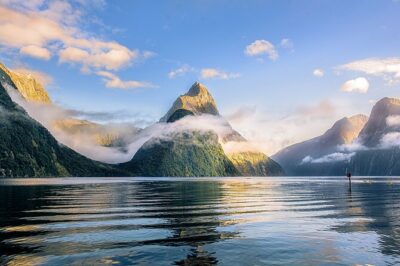 ★ 5.0Premium Milford Sound Small Group Tour & Cruise from QueenstownFrom $2163,001 reviews
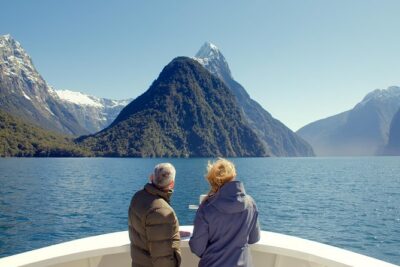 ★ 5.0Cruise Milford NZ Small Boutique Cruise ExperienceFrom $1112,930 reviews
 ★ 4.7Milford Sound Coach & Cruise Full-Day TripFrom $1442,592 reviews
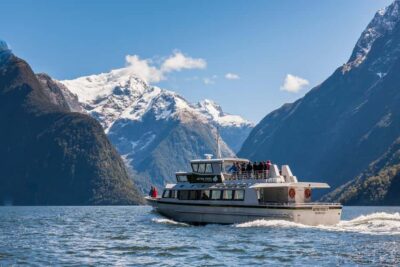 ★ 4.8Milford Sound: 2-Hour Small Boat Scenic CruiseFrom $1012,561 reviews
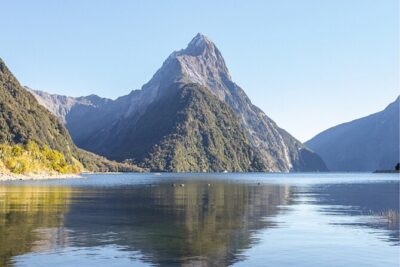 ★ 5.0Small Group, Award Winning Milford Sound Day Experience & CruiseFrom $2352,416 reviews
 ★ 5.0Milford Sound Fly-Cruise-Fly Tour from QueenstownFrom $4621,792 reviews
 ★ 4.9From Queenstown: Milford Sound Full-Day Trip by Plane & BoatFrom $4471,558 reviews
 ★ 5.02-Hour Milford Sound Scenic CruiseFrom $1041,520 reviews
Also filed under