
REVIEW · MOUNT COOK ALPINE DAY TRIPS
Mount Cook: 3-Hour Tasman Glacier Helicopter Ride and Hike
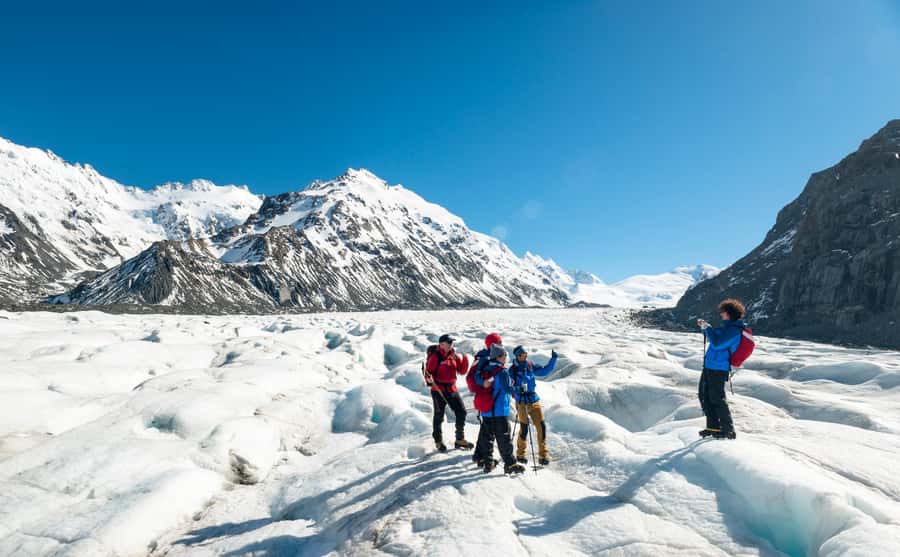
Aoraki looks different from the sky. This 3-hour helihike pairs two short helicopter flights with a guided walk on New Zealand’s biggest glacier, plus views of Aoraki/Mount Cook.
What I like most: you get serious time on the ice, up to 2 hours, and the whole thing is run for a small group (max 11), so you’re not lost in the crowd.
The only real drawback is the obvious one: it’s weather dependent, so the experience can change fast or even get canceled.
Key things that make this helihike work
- Two scenic helicopter flights: quick in, quick out, with big mountain views on the way to and from the glacier.
- Up to 2 hours on Tasman Glacier ice: long enough to actually walk around, not just shuffle for photos.
- Real glacier footwork: crampons, poles, and steps cut by your guide so you can move confidently on uneven ice.
- Gear is handled for you: leather boots, wool socks, waterproof jacket, crampons, and poles are included.
- Aoraki/Mount Cook fly-bys: you’ll see why it’s the main event here, from above as well as from near the glacier.
The 3-hour structure that gives you real glacier time

This tour is built like a great day hike with a wild twist. You start at Mount Cook Airport, get your safety briefing, take a short helicopter hop to the glacier, and then spend your main chunk of time walking on the ice. You’re back at the airport afterward with enough energy left to keep exploring around Mount Cook.
The big practical win is the “sweet spot” timing. A glacier hike can drag when weather, fitting gear, or slow pacing happens. Here, the day is organized so you get up to 2 hours on the ice, while the helicopter blocks are tight at about 15 minutes each.
There are two departure options, 8:45 AM and 10:45 AM. If you’re choosing between them, think about your wider day plan: you’ll likely want the morning slot if you have other Mount Cook activities to fit in.
Mount Cook Airport safety briefing, and why it matters

Before anyone heads to the glacier, you’ll do a 45-minute safety briefing at the airport. It’s not just paperwork. On ice, small mistakes become big risks quickly. This briefing is your chance to learn how the crampons work, how to step on angled ice, and how to follow your guide’s timing.
This is also where you’ll get a quick feel for the group flow. In a small team of up to 11, everyone matters. One person moving out of rhythm can slow the whole line and create hazards. Your guide’s job is to keep pace steady and spacing correct, and that starts with the briefing.
If you like structure, you’ll probably appreciate this part. If you prefer “figure it out as you go,” you might feel slightly boxed in. But on a glacier, that box is there for a reason.
Helicopter flights: two 15-minute views with different payoff
You get two helicopter flights, each about 15 minutes. They’re short, but they do three important jobs for you.
First, they place you on a remote part of the glacier. Walking that far from shore would be a very different adventure.
Second, the flights give you the “Mount Cook from above” perspective. Aoraki/Mount Cook is huge, and from the air you can read the scale in a way you just can’t on the ground. The pilots also point out landmarks when you’re up there, which helps you connect what you’re seeing to what you’ll later spot in the glacier area.
Third, the return flight is a mental reset. You finish your hike, catch a last look over the ice, then head back to base.
Seat comfort can matter in helicopters, and if you’re paying attention to views, aim for the best spot you can when boarding. You don’t control everything, but you can often improve your chances by choosing seats smartly.
The Tasman Glacier hike: what up to 2 hours on ice feels like

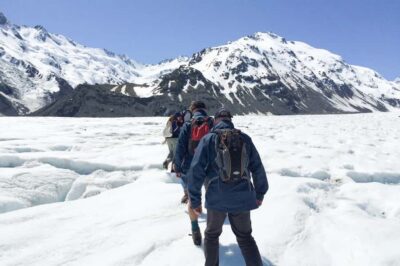
This is the heart of the day. After your helicopter ride, you get a photo stop, guided tour, and hiking on the Tasman Glacier for about 2 hours (weather permitting).
On this part of the tour, you’re following your guide as they manage the safest route across the ice. Expect to walk on a prepared path where steps are cut. That might sound intense, but it’s designed to let you focus on movement and footing, not on guessing where to put your crampons.
This is also where glacier features tend to show up. You may see things like ice formations that look otherworldly, and you might get the chance to walk through areas such as ice caves or tunnels, depending on conditions. One of the standout moments people talk about is stepping into narrow ice spaces, including features described as moulins (vertical ice shafts). You should treat these as “you might find them” rather than a promise, because glacier terrain and safety rules can change with the day.
The timing matters. Two hours is enough to actually experience the glacier, not just step out, snap photos, and leave.
Gear and clothing: what’s included, and what you should bring
The tour includes a full safety kit for the ice: leather boots, woolen socks, crampons, walking pole, and a waterproof jacket. That’s a major value point. You’re not stuck sourcing glacier boots or renting crampons last minute.
Still, your clothes under that gear are on you. For this kind of environment, pack warm clothing, and bring sunglasses and a hat. Glacier light can be harsh, and you’ll want to protect your eyes even when the sky looks bright.
A simple strategy: dress in layers you can vent or tighten as the hike intensity changes. You’ll likely feel warm during the walk and cold when you stop for photos.
Also, since this isn’t built for slow, sit-down sightseeing, prioritize mobility. Wear clothes that let you bend, step, and move without bunching where it could interfere with crampons.
Group size and guide style: how the pace stays safe
This tour runs as a small group with a maximum of 11 participants. That number matters. It keeps the line manageable on the glacier and helps your guide stay in control of spacing.
The guide experience is a big part of why this tour scores so highly. From the names you’ll hear associated with the service, guides such as Hunter, Jimmy, Kirsten, and Anna come up repeatedly. That pattern suggests consistent training and a safety-first mindset. In practice, that usually means clearer directions, better route choices, and more time spent understanding what you’re seeing instead of rushing through it.
What you’re really buying here is not just access to ice, it’s guidance that turns intimidating terrain into a controlled adventure. When the pace feels right, you can enjoy the moment, not just survive the next step.
One other note: glacier time depends on everyone following instructions. If someone in the group ignores safety rules or slows down at key moments, it can affect which features you get to see. So do your part by listening carefully and moving when instructed.
Aoraki/Mount Cook views you can’t get any other way
Aoraki/Mount Cook is impressive from the ground, but the helicopter angle gives you something else: a way to understand the mountain as part of a wider system of peaks, valleys, and glacier activity.
The tour is designed so you’re seeing the main landmark from above while also being physically on the ice connected to the region. You’re not just staring at a famous summit. You’re standing on the glacier that shapes it.
On good weather days, helicopter visibility can be excellent. That makes a difference because you’re looking for details: ridgelines, glacier edges, and the overall scale of Aoraki.
Price and value: is $537 per person worth it?

At $537 per person for a 3-hour outing, the price feels steep at first. But you need to price the experience against what it includes.
You’re paying for:
- Two helicopter flights (each about 15 minutes)
- A guided glacier hike with safety management
- Included gear: boots, wool socks, crampons, poles, waterproof jacket
Helicopter access to active glacier terrain is the whole point. If you had to hike to the same remoteness from the ground, you’d likely need a very different plan, much longer travel time, and a much higher risk profile without specialist guidance.
So the value question becomes: do you want a short, high-impact day with glacier walking and Aoraki fly-by views? If yes, the price starts to look more reasonable.
If you’re on a tight budget, or you mainly want scenic photos without gear and cold-weather walking, you may feel it’s not worth it.
Weather dependency: the real thing to plan around
This experience is weather dependent. That means your best move is to keep your schedule flexible.
Even in seasons when conditions can look promising, mountain weather can shift quickly. When visibility is good and conditions are safe, you’ll get the full experience, including up to 2 hours on the ice.
If you’re visiting Mount Cook as part of a tight itinerary with no buffer, consider whether losing a slot would ruin your whole day. Booking with a schedule cushion helps you enjoy the experience instead of stressing about it.
Who should book this helihike, and who should skip it
This tour fits best if you:
- Want a once-in-a-lifetime glacier walk with the safety structure of a guide
- Are comfortable moving on ice and following instructions
- Like the idea of getting big aerial views of Aoraki/Mount Cook
It’s not recommended for people with limited mobility and it’s not suitable for people with mobility impairments. Also, children under 9 are not suitable. If you or someone in your group has any uncertainty about comfort or movement, it’s worth checking with the operator before committing.
If you’re a strong hiker but hate cold gear or cramped conditions, you might find this tour a bit more intense than you expect. Bring the warm layers, take your time with each step, and trust the guide.
Should you book the Tasman Glacier 3-hour helihike?
I think you should book it if you’re excited by two things at once: walking on real glacier ice and seeing Aoraki/Mount Cook from above. The included gear reduces hassle, the small group size keeps things safer and more personal, and the time on the ice is long enough to actually feel the environment.
Skip it if weather risk would wreck your schedule, or if mobility limits make glacier walking unrealistic. And if you’re mostly chasing views but not the ice-walking part, you may find better value elsewhere.
If you want one memorable “Mount Cook, but different” day, this helihike is one of the best ways to do it.
FAQ
What is the duration of the Mount Cook Tasman Glacier helicopter ride and hike?
The tour runs for about 3 hours.
Where do I meet the tour for this experience?
Meet inside the terminal at Mount Cook Airport. Look for the Mt Cook Glacier Guiding desk.
Are there different departure times?
Yes. There are two time slots, 8:45 AM and 10:45 AM.
How long will I spend on the glacier?
You’ll spend up to 2 hours on the ice, depending on weather conditions.
What does the price include?
It includes two scenic flights, a tour guide, leather boots, woolen socks, crampons, walking pole, and a waterproof jacket.
Is food or drinks included?
No. Food and drinks are not included.
What should I bring with me?
Bring warm clothing, sunglasses, and a hat.
Is this tour suitable for children?
It is not suitable for children under 9 years old.
Is the tour wheelchair or mobility-friendly?
The trip is not recommended for people with limited mobility, and it is not suitable for people with mobility impairments.
Is the tour weather dependent, and can I cancel if needed?
Yes, it is weather dependent. Free cancellation is available up to 24 hours in advance for a full refund.
Mount Cook Alpine Day Trips, side by side.
 ★ 4.8Mount Cook: Scenic Helicopter Flight with Alpine LandingFrom $226442 reviews
 ★ 5.0Mt Cook Small Group Scenic Day Tour from QueenstownFrom $164407 reviews
 ★ 4.8From Queenstown: Mt Cook & Tasman Glacier Viewpoint Day TourFrom $146329 reviews
 ★ 4.8Tekapo Shuttle: Mt Cook Day Tour via Pukaki & Tasman LakeFrom $89307 reviews
 ★ 4.6Mount Cook: Ski Plane and Helicopter Glacier Combo FlightFrom $328271 reviews
 ★ 4.7Small Group Mt Cook Day TourFrom $166262 reviews
 ★ 4.7Mount Cook: 3 Hour Heli Hike to the Tasman GlacierFrom $564218 reviews
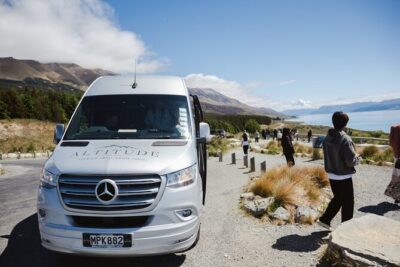 ★ 5.0Full-Day Guided Sightseeing Tour of Mount Cook from QueenstownFrom $173218 reviews