
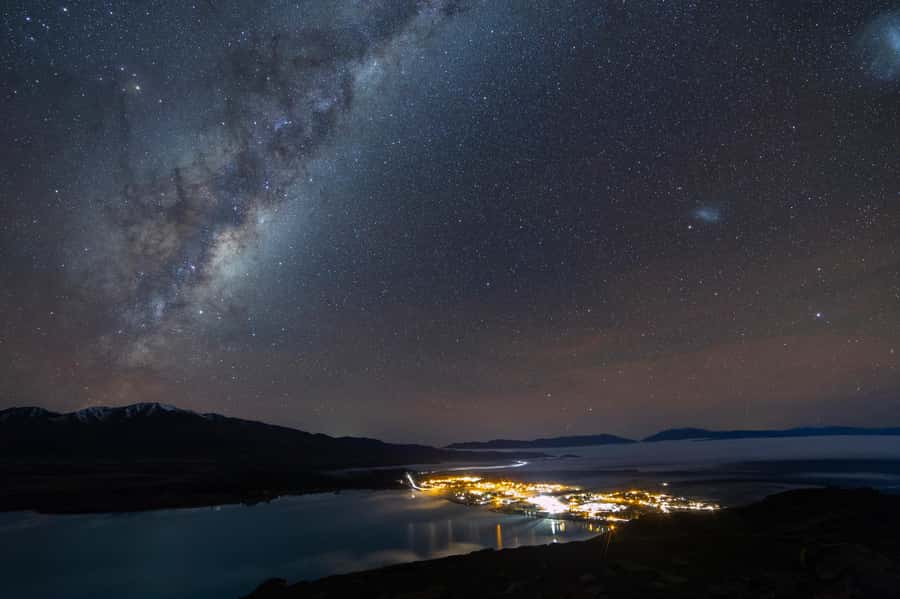
REVIEW · LAKE TEKAPO AND LAKE PUKAKI TRIPS
Lake Tekapo: Mountaintop Stargazing at Mount John Summit
The sky above Tekapo feels close enough to touch. That is the main idea behind mountaintop stargazing from Mount John: you climb above the lake and then watch the Southern Hemisphere night sky unfold in stages, from naked-eye constellations to telescope views, with expert guides doing the pointing. You also get access to the Dark Sky Reserve setting that makes the stars look sharper and more “real” than most places.
I really like the way the guides teach you to see, not just to look. You start with guided star spotting using handheld laser pointers, then you switch to high-powered telescopes when you know where to aim your eyes. I also love that the stargazing happens near a University of Canterbury research centre, so the whole vibe feels focused and science-driven, not random “tour guide talk.”
One thing to consider is that this is weather dependent. If clouds roll in, or conditions are poor, you may lose the best sky views even with the option of an indoor alternative or a refund. It is also cold up there, so you’ll want to take the warm clothing seriously.
Key highlights that matter (and why)

- Exclusive summit access on Mount John so you are not just staring from a parking lot
- Handheld laser pointers that help you learn the sky fast, even if you are new
- High-powered telescopes for closer views of major objects overhead
- Extreme cold weather jackets included, which is a big deal on a windy Tekapo evening
- Return transport from Dark Sky Project Base to the summit, so you can focus on the stars
Mount John’s Dark Sky Setting: What makes Tekapo special

Lake Tekapo is famous for stargazing for a reason, and Mount John is the reason you get the dramatic version of that fame. The summit sits at 1,029m above Lake Tekapo, and it is part of one of the best night-sky environments in the world, a Gold Standard International Dark Sky Reserve. Translation: light pollution is low, so the sky looks darker, and the Milky Way tends to show up with more clarity than you will find in many cities or even many “rural” areas.
I love that the experience is designed around this setting, not just the novelty of a mountain. You are on a summit, so the sky has that full overhead coverage. You are also far enough from bright lights that the early orientation portion actually works. That matters, because star spotting is much easier when your targets are visible, even before you touch a telescope.
You get to do this as an organized evening program, and that is the value. You are not left guessing where to look or whether you picked the right constellation. The guides build you a quick mental map of the sky, then they help you zoom in.
Getting to the summit: timing, transport, and the “dark walk” reality
Your night starts at the Dark Sky Project base on the Takapō (Tekapo) lakefront. Plan to check in at least 20 minutes early, because this is the window where jackets, group timing, and instructions happen. The tour is 105 minutes total, so there is not much spare time. Showing up late can mean you miss the first part that sets you up for the telescope phase.
One practical detail I appreciate is that the tour includes return transport to the Mount John summit. That matters because getting up and down in the dark can be more stressful than it sounds. You are not driving yourself, and you are not trying to coordinate taxis at night.
There is also a real physical requirement here, even if you are not doing an intense hike. The experience needs a minimal fitness level: you should feel confident walking about 100 meters on a gravel incline and climbing a couple of steps in the dark. If you have mobility limitations, the tour is not suitable. I like that they are clear about it up front, because it helps you avoid the awkward situation where the sky is great but your body is not cooperating.
The first star lesson: naked-eye Southern skies with laser pointers

Once you are up there, the program usually starts with a guided look at the Southern skies. This is the part I think most people underestimate. It is easy to rush straight to the telescope, but the naked-eye orientation is what makes the whole night click.
You get help using handheld laser pointers. The point is not just to name stars, it is to teach you how to find things. That way, when the guide shifts to “look left, then up a bit,” you understand what you are doing. Even if you only remember a few star patterns, that knowledge makes future stargazing more satisfying.
If the sky is clear and the moon situation is favorable, you may get an excellent view of structure in the Milky Way. One tip that really comes through in my reading of how people talk about these nights is timing with a new moon. On darker nights, the Milky Way and fainter features are easier to spot, not just through a telescope but with your eyes.
Also, flash photography is not allowed. That is not just a rule for neatness. It protects night vision for everyone and keeps the focus on real-time viewing.
Telescope time at the University of Canterbury area
After the orientation, the program shifts to high-powered telescopes. This is the step where “wow” turns into “wait, I did not realize that was there.”
The telescopes can show details on major targets in the sky, and the guide is there to explain what you are seeing in plain language. From guest stories, guides have called out things like finding the southern celestial pole and showing well-known targets such as Alpha Centauri and Jupiter. That kind of object spotting makes the night feel like a guided astronomy tour, not a generic stargazing bus stop.
Because this is conducted around a University of Canterbury research centre area, it tends to feel structured and serious. That does not mean it is dry. The best moments tend to happen when the guide mixes big-picture explanations with practical “how to see it” instructions.
One caution on expectations: telescopes can make objects look larger, but they still show up as points or compact shapes for many stars and deep-sky targets. If you are expecting huge, dramatic planet-sized views all the time, you might end up a touch disappointed on some nights depending on what is visible and on sky conditions.
Cold-weather gear and small comforts that help a lot

Mount John nights can be brutally cold, and the tour prepares for that. You are provided an extreme cold weather jacket on check-in, which is a major plus if you forgot to pack the right layers. Still, you should dress for cold weather anyway. The tour recommends weather-appropriate clothing year-round because you are on a mountaintop in the dark.
A couple of small “comfort” details come up in accounts from past nights. For example, some people mention receiving hot chocolate on arrival, and others note they were given a lanyard torch to help move around in darkness. Those touches matter because the first 10 minutes up top are when you either feel comfortable or you start shivering through the best sky time.
The no-flash rule also ties into comfort. If you keep your hands and camera settings simple, your night vision stays intact and you get more out of the guide’s pointing.
Price, value, and how to judge if it’s worth $130

At $130 per person for a 105-minute mountaintop astronomy session with transport and jackets included, this is not the cheapest activity in Tekapo. But it is not an overpriced “sit and stare” either.
Here is what you are paying for, in practical terms:
- Summit access at Mount John, not just a viewing area at the base
- Return transport included so you are not handling logistics at night
- Guides who run a structured stargazing program, including orientation with laser pointers
- Telescopes that you do not have to bring or operate yourself
- Extreme cold weather jackets, a real cost and convenience saving
So the value question becomes: do you want to learn the sky with help, and do you want a guided night that is optimized for seeing conditions? If yes, the price tends to make sense. If you just want photos and do not care about learning anything, you might decide to do a self-guided stargazing session elsewhere in the Tekapo area. This tour’s strength is the guided learning and the summit positioning.
If you are flexible with timing, you can also aim for darker-sky nights. People specifically mention that moon brightness can reduce the Milky Way visibility, even when the telescope shows plenty.
Who this Mount John stargazing tour is best for

This is a family-friendly outdoor experience, but with an age rule: 10 years and over. If you’re traveling with older kids who are curious about space, it can be a great “learning plus wonder” activity.
It is also a good fit for:
- First-time stargazers who want clear instructions and star-finding help
- Anyone who prefers a structured evening with expert interpretation
- People who appreciate planning around conditions like cloud cover and moon brightness
It is not a good fit for:
- Children under 10
- Anyone who cannot comfortably handle the dark steps and short gravel incline
- People who need accessibility accommodations that are not listed as suitable here
One more thing that can surprise people: the tour requires you to speak the language of the tour for health and safety reasons. The available languages are Japanese, English, and Chinese, but you are not just watching and listening, you are participating in a safety-focused way.
If the sky is cloudy: how the experience handles the weather

This tour is weather dependent, and that is true for almost all astronomy experiences. The difference here is that you are not left totally stuck. If conditions are bad, the tour can be cancelled, and an indoor alternative may be offered, or a full refund provided.
From a planning standpoint, this means you should build in flexibility if you can. If you are only in Tekapo for one night, your plan is still reasonable, just know that New Zealand weather can be unpredictable. If you have more than one evening, your odds of a clear sky improve.
So, should you book Lake Tekapo Mount John stargazing?

I think you should book this if you want the best chance at a truly rewarding night under the Southern skies, with actual guidance. The setup makes it easy to succeed: summit location, dark-sky environment, laser-guided orientation, telescopes, and warm jackets. It is also run by guides affiliated with astronomy and research, and that shows in the structured explanations.
Skip it or reconsider if:
- You cannot meet the basic fitness requirement for walking and steps in the dark
- You are very sensitive to cold weather and do not think you can layer up
- Your schedule is fixed to a single night with no backup option, since it is weather dependent
- You do not speak one of the tour languages (Japanese, English, or Chinese), because entry depends on language for safety
If you match those conditions, this is one of the best ways to experience Tekapo at night. You leave with more than photos. You leave knowing how to find a few key things in the sky the next time you see a dark horizon.
FAQ
Where is the meeting point for the Mount John stargazing tour?
You meet at the local supplier, Dark Sky Project, at the Takapō (Tekapo) lakefront. Check in at least 20 minutes before departure.
How long is the stargazing experience on Mount John?
The total duration is 105 minutes (1 hour 45 minute).
What is included in the tour price?
The tour includes the 105-minute stargazing experience, exclusive access to the Mount John summit, return transport to the summit, a stargazing setup around the University of Canterbury research centre, an astronomy guide, and an Extreme cold weather jacket.
What language tours are available?
The tour is available with live guides in Japanese, English, and Chinese.
What should I bring for this mountaintop experience?
Bring weather-appropriate clothing. The tour is cold, and you are on a mountaintop at night.
Is flash photography allowed during the stargazing?
No. Flash photography is not allowed.
Is the experience suitable for young children?
No. It has an age restriction of 10 years and over.
Is the tour weather dependent?
Yes. The tour is weather dependent. If conditions are bad, it can be cancelled, and an indoor alternative may be offered, or a full refund provided.
Can I cancel and get a refund?
Yes. There is free cancellation up to 24 hours in advance for a full refund.
More Tour Reviews in Lake Tekapo
- Lake Tekapo: Alpine Stargazing Experience with a Guide
★ 4.5 · 626 reviews - Lake Tekapo: Stargazing Experience
★ 4.9 · 607 reviews - Tekapo Shuttle: Mt Cook Day Tour via Pukaki & Tasman Lake
★ 4.8 · 307 reviews - Chameleon Stargazing Shared Tour
★ 5.0 · 181 reviews
When the Sky Clears
- Lake Tekapo: Alpine Stargazing Experience with a Guide
★ 4.5 · 626 reviews - Lake Tekapo: Stargazing Experience
★ 4.9 · 607 reviews - Chameleon Stargazing Shared Tour
★ 5.0 · 181 reviews - Mount John Observatory Stargazing Experience, Tekapo
★ 4.5 · 160 reviews
That Mackenzie Blue
- Lake Tekapo: Alpine Stargazing Experience with a Guide
★ 4.5 · 626 reviews - Lake Tekapo: Stargazing Experience
★ 4.9 · 607 reviews - Tekapo Shuttle: Mt Cook Day Tour via Pukaki & Tasman Lake
★ 4.8 · 307 reviews - Mount John Observatory Stargazing Experience, Tekapo
★ 4.5 · 160 reviews
Lake Tekapo and Lake Pukaki Trips, side by side.
 ★ 4.5Lake Tekapo: Alpine Stargazing Experience with a GuideFrom $59626 reviews
 ★ 4.9Lake Tekapo: Stargazing ExperienceFrom $71607 reviews
 ★ 4.8Tekapo Shuttle: Mt Cook Day Tour via Pukaki & Tasman LakeFrom $89307 reviews
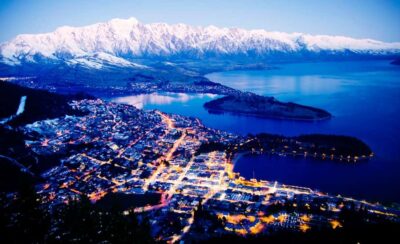 ★ 4.6From Christchurch: Queenstown via Tekapo & Mt Cook Day TripFrom $238167 reviews
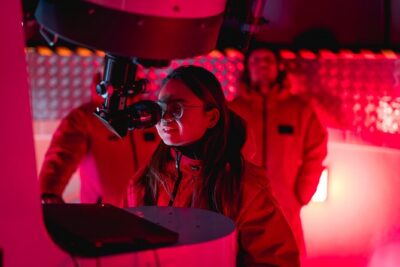 ★ 4.5Mount John Observatory Stargazing Experience, TekapoFrom $139160 reviews
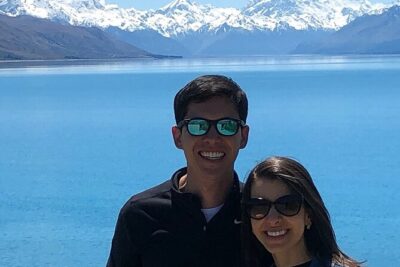 ★ 4.5Queenstown to Christchurch One-Way Tour via Mt Cook & Lake TekapoFrom $235134 reviews
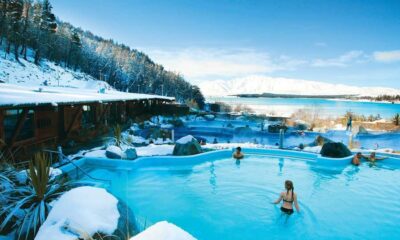 ★ 4.2Lake Tekapo: Single Day Multiple Entry Pass for Hot PoolsFrom $23129 reviews
 ★ 4.5Tekapo Star Gazing Tour – Soak in the StarsFrom $117109 reviews