
REVIEW · MOUNT COOK ALPINE DAY TRIPS
The Adventurer: Tasman Glacier Heli-hike
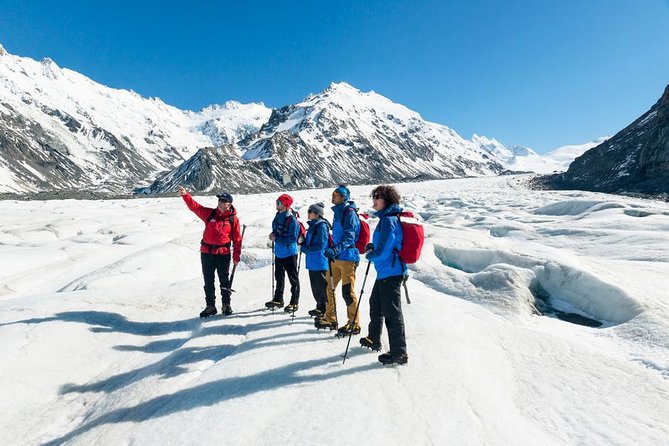
Heli-hiking on a glacier is a fast ticket to wow. I love the round-trip helicopter flights that give you big views of Aoraki/Mt Cook from above, and I love that the guided glacier hike is done with the right gear, so you can focus on the ice and photos instead of logistics.
The one drawback is simple: this is a high-cost, weather-dependent adventure, so if conditions are iffy you may wait until the last possible moment or shift dates.
Quick hits for your Tasman Glacier heli-hike

- Two scenic flights with a Mount Cook fly-by on the way to and from the glacier
- Warm, real glacier gear included, like leather boots, wool socks, and waterproof jacket and over-trousers
- Crampons or snow shoes fitted for safer travel on the ice
- Small group size (max 11) so your guide can watch your footing and pace
- Guide-led ice exploration with step-cutting on the glacier and plenty of chances to stop and look
Why a Tasman Glacier heli-hike beats a viewpoint stop
If your New Zealand road trip already has photo pull-offs, this is the next step up. A helicopter gets you out of the usual “look at the ice” category and into “walk on the ice” territory, which changes how the whole place feels. You are not just seeing Tasman Glacier from a distance, you are moving across it, up close to ice formations that would be hard to reach any other way.
The real value here is how the experience is built around time and attention. You get a guided hike where your group stays together and your guide manages safety, route choices, and the rhythm of stops for photos. And because the group is capped at 11 people, it does not feel like you are part of a slow-moving crowd.
Price is the obvious question. At $572.23 per person, you are paying for two helicopter rides plus professional guiding plus the gear. If you come to Mount Cook wanting one adventure that feels genuinely different from everything else, this is the sort of splurge that can make the trip feel complete.
The Mt Cook helicopter flights, and the Aoraki/Mt Cook fly-by

The day starts at Mount Cook Airport. Then you fly to a remote drop-off point on the glacier for the hike. The flight is not filler. It is part of the attraction because you get to see some of the highest and most dramatic parts of the region from the air.
A key highlight is the scenic route that includes a fly-by of Mount Cook, also known as Aoraki. From a helicopter, you get a sharper sense of scale. Mountains look layered and close, glaciers look like they are carved into the land, and the weather can add mood fast, even when it stays unpredictable.
One detail I especially like, based on guest feedback, is that seating may be managed so more people get an enjoyable view. Some groups describe the crew adjusting seating so everyone gets a window or front seat experience on either the outbound or return flight. That matters on a short tour because you do not want the best views to go to just one side of the cabin.
Also, be mentally ready for helicopter scheduling. Departures can be tight, and the company notes you cannot delay the flight if you miss your slot, with a potential full charge if they cannot resell the space.
Landing on Tasman Glacier: boots, wool socks, and crampons
Once you arrive, the tour shifts from aerial views to practical mountain work. You will be fitted with crampons for traction, and in winter you may use snow shoes depending on conditions. Your ability to walk well is helped by the gear and by the way the guide leads the group.
The kit is one of the strongest parts of the experience. You get quality leather boots and woolen socks, plus adjustable walking poles. On top of that, you wear a waterproof jacket and over-trousers, and you may use a harness if required. In plain terms, this is set up so you are not forced to buy cold-weather gear in advance.
That gear choice matters more than you might think. On glaciers, the cold is not just air temperature. It is wind, meltwater, and the way your feet feel when you are standing still while the group gets instructions or your guide cuts steps. Warm layers inside waterproof clothing help a lot, and the tour specifically asks you to bring 3 to 4 layers for your upper body.
On safety and technique, the guides use methods passed down from New Zealand mountain pioneers, and you can feel it in how step-cutting is done. Expect a guided pace where you learn how to place your feet and where to hold onto your balance, without turning the hike into a test of athleticism.
The glacier hike at about 1,300 m: ice formations, tunnels, and photo breaks

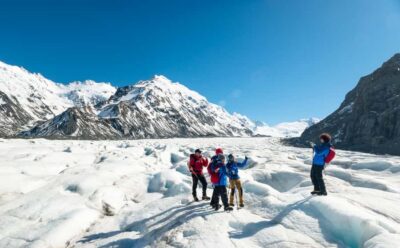
The on-ice portion happens at roughly 4,265 ft (1,300 m). That altitude is part of why the air can feel sharp, but the bigger factor is that you are on snow and ice surface that changes with the season. The tour description frames this as a remote exploration where you follow your guide across areas you would otherwise have to reach by an arduous overland route.
What you do during the hike is guided movement plus stops to observe. Your guide is cutting steps in the glacier and leading your group along the safest line. The pace is not about speed, it is about footing, staying together, and spending time where the ice formations are most interesting.
From guest accounts, a few kinds of ice features can be part of the experience, including areas that feel like glacier caves or ice tunnels, plus dramatic small-scale ice action. One group described a climb down into a blue-white hole with water surging underneath, while others highlight ice caves and even watching small avalanches. You should think of these as “possible highlights” rather than a guaranteed checklist, since the glacier changes and access depends on conditions.
What is consistent is the chance to take photos. The experience is structured so you are not rushing through. If you come with a camera, this is where it pays off. Glacier textures look different depending on where the sunlight hits, and ice colors can shift quickly when weather changes.
Fitness-wise, the tour asks for moderate physical fitness. That usually means you should be comfortable walking on uneven ground, dressing for cold, and keeping up with a guided group at altitude. It is not described as a beginner-free for all, but it is also not framed as a technical climb. Still, you will be stepping on ice, and your balance will matter.
The return flight and the best moments to look for

After the hike, the tour ends with another helicopter flight back to the Mount Cook base. This second scenic ride matters because it gives you a chance to see what you just walked across from a different angle. It also helps the whole adventure feel like a full loop, not a one-way drop-off.
Some groups mention extra close passes with glacier and mountainside terrain during the flight back. That kind of moment is the reason you do not want to treat the helicopter as only transportation. When the pilot can line up views, you may get a quick, unforgettable glance of ice spilling into rocky faces and valleys.
Photo advice is simple. Have your camera ready during takeoff and landing, but do not make a big production while the pilot is working the aircraft. If you are on a window seat, look for the glacier’s edges and flow lines. If you are not, you can still enjoy it because the helicopter route is scenic by design.
Price and value: what you are really paying for at $572.23

Let’s talk value without hand-waving. At $572.23 per person, you are buying four big things:
1) Two helicopter flights
2) A professional guide
3) Full cold-weather gear for the glacier hike
4) Traction equipment like crampons, plus poles
If you price those components separately, especially the helicopter portion, you start to see why this is a premium tour. The cost is not just paying for access, it is paying for safety systems, equipment, and expertise that keep you moving on ice.
Where this becomes worthwhile is if your Mount Cook trip has one “big adventure” slot. This is that slot for a lot of people because it connects views of Aoraki/Mt Cook with actual time on Tasman Glacier. It also solves a common travel problem: cold gear. You do not have to guess what you need, and you do not have to risk being underdressed.
If you already have multiple outdoor activities planned and you hate high prices, it can feel steep. But if you want one day that makes the region feel close and real, this tour aims directly at that.
Who should book this, and who should skip it

This heli-hike is a great match if you want an active glacier experience but do not want to take on the logistics of cold-weather gear and technical route finding. It is also a good fit if you like small groups, because a max of 11 people keeps the guide’s attention distributed.
Based on guest feedback, guides such as Flav, Hunter, Fiona, Richard, Pawel, and Anna are repeatedly praised for friendly guidance, clear safety talk, and finding good ice features for the group. That pattern matters because a glacier day is only enjoyable if the guidance is solid.
You should think twice if:
- You have issues walking for a sustained period on uneven, icy ground.
- You are not comfortable dressing in multiple warm layers and keeping yourself dry.
- You dislike weather uncertainty, since the tour requires favourable conditions and helicopters are scheduled tightly.
On the positive side, the day is built so you do not need special climbing experience. The guide’s role is huge: they cut steps, you follow their lead, and you focus on the ice.
Packing tips: how to stay warm, dry, and camera-ready

The tour provides a lot of the critical gear, but you still need to show up prepared. Here’s what the experience asks you to bring and why:
- 3 to 4 layers of warm upper body clothing: cold can creep in fast on the ice and while you stop for photos. Layers let you adjust without overheating.
- Warm trousers (no jeans): jeans can hold moisture and do not insulate as well when wet.
- Sunglasses and sun protection: glare off ice is real, even when skies are not bright.
- Hat and gloves: hands and head lose heat quickly in windy conditions.
- Drink and snacks: the tour duration is short, but you will feel better if you are not starting under-fueled.
Do not rely on the waterproof jacket to fix everything. It protects, but you still need layers and you still need to keep your body temperature stable.
Weather and timing are worth respecting. If conditions are not safe, the operator may cancel and offer an alternative date or a full refund. That said, you cannot expect a big delay, because helicopter schedules are strict. If you miss your confirmed departure time and they cannot resell the space, you can be charged for 100% of the cost.
So my practical advice is boring but important: build extra buffer time on your Mt Cook day, and be ready to move quickly when you get the go-ahead.
Should you book the Tasman Glacier Heli-hike?
Book it if you want one standout Mount Cook experience that combines Aoraki views from a helicopter with a real guided walk on Tasman Glacier. The included gear is a big help, and the small group size makes it feel more personal than most mass tours. If the idea of crampons, ice formations, and guided step-cutting sounds like your kind of day, this is a strong pick.
Skip it if you are budget-sensitive, avoid cold weather, or know you might struggle with moderate fitness on icy ground. Also, if you hate anything weather-dependent, keep in mind this is built around favourable conditions, and operations can shift.
If you are planning your South Island route around glaciers, this heli-hike is one of the few ways to make the ice feel close without turning your day into an all-day overland mission.
FAQ
How long is the Tasman Glacier Heli-hike experience?
It runs for about 3 hours.
Where does the tour start and end?
The meeting point is Mount Cook Airport (Mount Cook Road, Canterbury Region 7999, New Zealand), and the activity ends back at the meeting point.
What gear and equipment are included?
You get quality leather boots and woolen socks, waterproof jacket and over-trousers, adjustable walking poles, crampons (and/or snow shoes in winter), and a harness if required.
How many people are in the group?
The tour has a maximum of 11 travelers.
What happens if the weather is not favourable?
The experience requires favourable weather. If it is canceled due to poor weather, you will be offered an alternative date or a full refund.
What fitness level do I need?
You should have a moderate physical fitness level.
On Foot in the Hills
- Mount Cook: 3-Hour Tasman Glacier Heli-Hike
★ 4.5 · 29 reviews
Above the Main Divide
- 45-Minute Mount Cook Ski Plane and Helicopter Combo Tour
★ 4.5 · 107 reviews - 45-Minute Glacier Highlights Helicopter Tour from Mount Cook
★ 5.0 · 57 reviews - 25-Minute Helicopter flight including an alpine landing
★ 4.5 · 49 reviews - 55-Minute Grand Circle Helicopter
★ 4.5 · 36 reviews
Four Hours North to Aoraki
- 45-Minute Mount Cook Ski Plane and Helicopter Combo Tour
★ 4.5 · 107 reviews - 45-Minute Glacier Highlights Helicopter Tour from Mount Cook
★ 5.0 · 57 reviews - Mount Cook: 3-Hour Tasman Glacier Heli-Hike
★ 4.5 · 29 reviews - 45-Minute Glacier Highlights Ski Plane Tour from Mount Cook
★ 5.0 · 19 reviews
Mount Cook Alpine Day Trips, side by side.
 ★ 4.8Mount Cook: Scenic Helicopter Flight with Alpine LandingFrom $226442 reviews
 ★ 5.0Mt Cook Small Group Scenic Day Tour from QueenstownFrom $164407 reviews
 ★ 4.8From Queenstown: Mt Cook & Tasman Glacier Viewpoint Day TourFrom $146329 reviews
 ★ 4.8Tekapo Shuttle: Mt Cook Day Tour via Pukaki & Tasman LakeFrom $89307 reviews
 ★ 4.6Mount Cook: Ski Plane and Helicopter Glacier Combo FlightFrom $328271 reviews
 ★ 4.7Small Group Mt Cook Day TourFrom $166262 reviews
 ★ 4.9Mount Cook: 3-Hour Tasman Glacier Helicopter Ride and HikeFrom $537235 reviews
 ★ 5.0Full-Day Guided Sightseeing Tour of Mount Cook from QueenstownFrom $173218 reviews