
REVIEW · LAKE WANAKA ADVENTURES
Wanaka: 2-Hour Beginner Waterfall Cable Climb
Climb a waterfall, safe and thrilling. At Twin Falls near Wanaka, you’ll tackle a beginner via ferrata route into the rock face and over pools with real mountain air and real views.
I especially love that it starts with a guided practice climb, so you’re not figuring out the gear while you’re already hanging over water. I also like the small-group pace, with lots of time for tips and reassurance from guides such as Rocky, Sarah, Connor, Luke, and Maddie, who show up again and again in good feedback.
One heads-up: you need full body mobility and comfort with heights, because suspension bridges and exposed rock are part of the fun.
Key Things to Know Before You Go

- Practice first, climb second: you get safety skills on a training route before you join the waterfall section.
- Small groups: you’re in a group of no more than 5 people per guide, which makes instruction easier to absorb.
- A mix of climbing and walking: expect hiking to the cliffs, cable work up, then a walk down through the area.
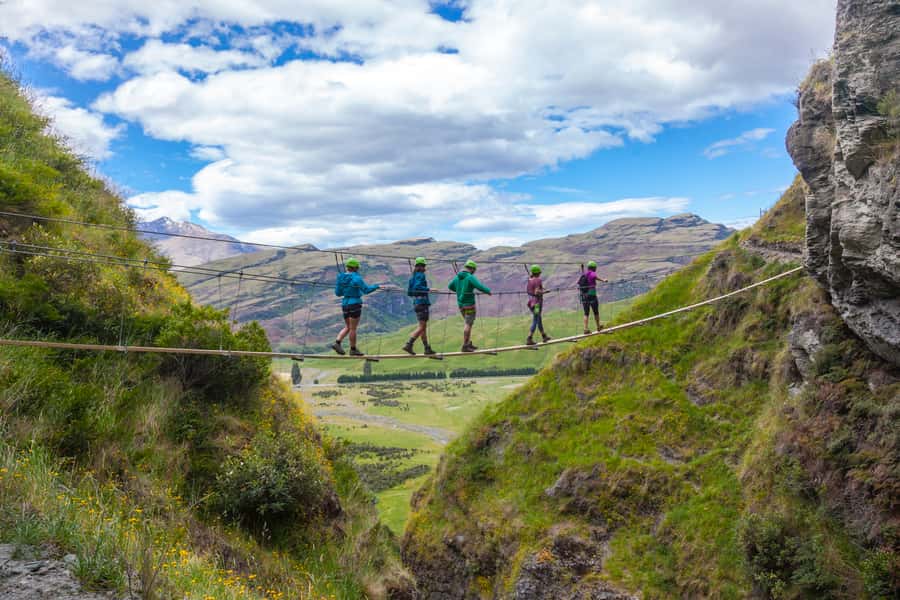
- Suspension bridge moments: you’ll cross over pools, so bring your calm.
- Hidden waterfalls as you rise: you’re not just climbing for a view, you’re moving through a water-and-rock route.
- Photo-friendly tech support: GoPro use is supported with slide attachments on request, and cameras are allowed at your own risk.
Why Twin Falls Via Ferrata Feels Like Wanaka in a Nutshell

Wanaka has this way of turning an ordinary afternoon into a story you brag about later. This Twin Falls cable climb does that fast. You start near a working farm waterfall, then work your way upward using fixed cables, iron rungs, pegs, and built-in bridges, until the world opens up over farmland, mountains, and Lake Wanaka.
If you’re new to climbing, this is a big part of the appeal. You’re not expected to be technical. Your guides handle the hard parts: equipment fit, safety flow, and the small body mechanics that make you feel steady. That’s why so many first-timers describe the experience as challenging but never overwhelming.
The other reason it works so well is variety. Your route includes vertical and horizontal rock sections, plus a suspension bridge crossing over pools, plus time where you can look around and actually take it in. You don’t just climb, you explore along the way.
The Route at a Glance, from Practice to the Waterfall View
Total time is about 3 hours, even if the core climb is closer to 2 hours. Here’s the shape of your experience:
You’ll begin with a 1.5-hour via ferrata introduction. That includes a safety briefing, getting your helmet and harness sorted, and a practice climb so you learn how the system works before you’re on the real line.
After that, you’ll join a small group (no more than 5 per guide). You’ll do roughly 1 hour of climbing on the beginner route, which blends rock scaling with crossings and short discoveries along the route, including hidden waterfalls and pools.
At the top, you’ll pause for a small snack and drink with panoramic views. Then you’ll descend on a trail that takes about 15 minutes back to the base of the waterfall.
That timing matters. You’re not rushing, but you also don’t spend all day hiking. It’s a good sweet spot for Wanaka, especially if you’re doing other activities nearby.
Getting There and Meeting at the Locked Farm Gate

Your meeting point is the Wildfire area at Twin Falls waterfall. You’ll see a locked farm gate with the activity provider’s sign on it, and you should meet right in front of the waterfalls at that gate.
From Wanaka town, drive west along the Wanaka-Mt Aspiring Road toward Treble Cone Ski Field and Mt. Aspiring National Park. About 20 minutes in, you’ll pass a cattle stop. Pull out immediately to the left in front of two massive waterfalls.
Two practical tips:
1) Arrive 15 minutes early. The day runs smoother when gear fits happen without stress.
2) Keep an eye out for that locked gate sign, because it’s your exact cue that you’re at the right spot.
Gear, Briefing, and the Safety System That Keeps It Beginner-Friendly

You’ll meet your guide(s), then get helmets and harnesses. You’ll also receive a safety briefing before you climb anything that actually counts.
This part is more than ceremony. When you do a via ferrata-style route, your confidence depends on understanding how you connect to the fixed cables and how you move while staying secure. Guides spend time here because the whole point is that beginners can participate without guesswork.
Based on the way guides are praised in feedback, you should expect calm, patient coaching. Names like Rocky and Chester show up in notes about staying relaxed, and Connor and Sarah are repeatedly mentioned for making first-timers feel safe. That lines up with how the experience is designed: practice first, then guided movement step by step.
You will be given climbing safety equipment and you’ll have small snacks and water included, but you’re asked to bring your own water bottle. It’s an easy detail to miss, so add it to your packing list early.
The 1.5-Hour Intro Climb, What You Actually Learn

The via ferrata introduction is where this tour earns its beginner label. It’s not just a quick safety chat. You’ll do a practice climb so you learn the basic rhythm of moving along fixed lines and using the holds effectively.
Here’s what you should be ready for during that intro:
- You’ll practice on a route that helps you understand cable climbing movement.
- You’ll get instruction on how to use rungs and pegs safely.
- You’ll learn how bridges and ladders fit into the route style, even if you haven’t tried it before.
The big benefit is mental. When you’ve learned the system on a training section, the real waterfall climb stops feeling like a leap and starts feeling like a series of steps. That’s what makes the later suspension bridge crossing easier to handle, especially if heights make you nervous.
Your fitness level matters, but not in the gym sense. You do need moderate fitness because there’s a combination of hiking, rock climbing, and walking. Also, participants must have full body mobility, so if you have limited range of motion, this might not suit you.
The Beginner Waterfall Climb: Cable, Iron Rungs, Hidden Pools

Once you start the beginner route, you’ll climb about 1 hour. The terrain mixes:
- vertical and horizontal rock climbs
- fixed cables with secure hand and foot positions
- bridges over pools
- moments where hidden waterfalls and pools show up along the way
This is the heart of why Twin Falls is so memorable. It feels like you’re moving through the side of the world, right next to active water. You’re not far from the action, and the rock textures force you to pay attention in the best way.
You’ll also get that sense of progression. Lower sections focus on basics, then you gradually work your way upward. Multiple guides are noted in feedback for patience and encouragement, and that’s especially helpful here if you’re the kind of person who starts thinking too hard once your feet leave the ground.
Suspension Bridges and Cliff Scaling, Managing the Height Factor

Let’s be honest: the suspension bridge is the part that makes people smile and tense up at the same time. You’ll cross over pools, so you get movement and exposure in the same moment. That’s why comfort with heights matters.
Good news, if you’re nervous: the beginner structure reduces surprises. You’re in a small group, the guide stays close, and you’re already practiced on the basics. The guides are frequently praised for being supportive and calming, including comments about time spent on instruction and making nervous climbers feel at ease.
What to do with your mind while you’re on the bridge:
- focus on the next hold, not the whole drop
- move smoothly instead of rushing
- keep your breathing steady, especially when the bridge sways
If you’re afraid of heights, this still might be out of your comfort zone. Several notes point out that you have to be willing to handle high exposure, even if the safety setup is strong.
So use a simple self-check: do you freeze at the edge of a viewpoint, or do you manage it with steady breathing and focus? If you’re in the second camp, this can be a surprisingly good confidence builder.
The Snack Stop and Lake Wanaka Views You Earn on the Climb

At the end of the trail, you’ll stop for a small snack and drink. This is not a throwaway moment. It’s timed so you can actually absorb what you climbed through.
You’ll be looking out over farmland, mountains, and Lake Wanaka. That panoramic payoff is why people keep calling this a highlight of their trip to the South Island. Even if you only do the beginner route, the views at the top are part of the deal.
If you’re wondering whether the climb is worth it just for photos, the answer is yes, but with a caveat. Cameras are allowed at your own risk, and if you bring a GoPro, it’s recommended you attach it to your person or ask a guide about a helmet with a slide attachment.
The Descent Back Down, About 15 Minutes of Trail Time

When you finish the climbing portion, you’ll descend back down the mountain. For the beginner route, it’s about a 15-minute walk back to the base of the waterfall.
Descending is usually easier than ascending physically, but it can still feel tricky if your legs are tired. You’ll be moving away from the fixed line and back onto trail sections. The best way to keep it smooth is to follow your guide’s cues and not rush, even if your head says you’re done.
Price and Value: Is $118 Worth It?
$118 per person can sound like a lot until you look at what’s included. You’re paying for access to a specialized route, professional guiding, and the safety system that makes a beginner waterfall climb possible.
Included in your price:
- expert guide support
- climbing safety equipment and a safety briefing
- a practice training climb
- small snacks and water
Not included:
- a water bottle (you’ll want one anyway, especially if it’s warm)
Value is also about group size. With a maximum of 5 people per guide, you get more attention and less waiting. For a first-time activity like this, that matters. You’re not just buying movement time, you’re buying instruction time.
If you’re the type who enjoys trying one “active” thing in a destination, this is a strong use of a half-day. And if you’re going to spend money in Wanaka, you want it to turn into a story, not just a photo from a lookout. This does that.
Who Should Book This Beginner Cable Climb
This experience is best for people who want adventure but don’t want to guess their way through it. You do not need prior climbing experience. Guides assist you throughout.
You should consider booking if you:
- can handle a moderate hiking and rock climbing day
- have full body mobility
- can tolerate heights enough to cross suspension bridges
- want stunning views without a technical background
And you should not book if:
- you’re under 10 years old (minimum age is 10)
- you’re under 40 kg
- you’re under 120 cm tall
- you have mobility impairments
- you’re over 120 kg
Also, open-toed shoes aren’t allowed, so wear proper hiking shoes.
What to Pack for Wanaka Weather, Shoes, and Cameras
Bring:
- water (and yes, bring a water bottle even though water is included)
- weather-appropriate clothing
- a daypack
- hiking shoes
Wear:
- closed-toe footwear. Open-toed shoes are not allowed.
A few practical reminders:
- Bring clothing you can move in, because you’ll use rungs and pegs and you’ll be in harness gear for a while.
- If you’re camera-heavy, plan for helmet mounting support for GoPros. If not, keep your camera secure and understand it’s at your own risk.
Wanaka weather can change fast. Even if the day looks calm, you still want layers and grip-friendly shoes.
Should You Book the Wanaka Twin Falls Beginner Cable Climb?
Book it if you want a beginner-friendly adventure with real outdoor payoff. This is a rare kind of activity where the fear factor is managed through practice, coaching, and small groups, while still delivering waterfall climbing, suspension bridges, and major views.
Skip it if heights make you shut down mentally or if you don’t meet mobility requirements. The route includes exposed moments, and while it’s designed for beginners, it still asks you to move confidently.
If you’re on the fence, use this simple decision rule: do you want to trade a long scenic drive for one active, guided story with panoramic reward? If yes, this is the kind of “do it once, do it well” Wanaka experience that sticks.
FAQ
How long is the Twin Falls beginner cable climb?
The experience runs about 3 hours total, including training, climbing, and descent.
Do I need climbing experience to do the beginner route?
No. You do not need any climbing experience, and guides will assist you. There’s also introductory training and a practice climb first.
Where do I meet for the activity?
Meet at the Wildfire, Twin Falls waterfall, in front of the locked farm gate with the activity provider’s sign.
What’s included in the price?
You get an expert guide, climbing safety equipment and a safety briefing, intro training for the via ferrata climbing, plus small snacks and water.
Is a water bottle provided?
Water is included, but a water bottle is not. You should bring your own.
What shoes should I wear?
Open-toed shoes are not allowed. Wear hiking shoes with closed toes.
What fitness level do I need?
The experience includes hiking, rock climbing, and walking, so a moderate level of fitness is recommended.
Is there a minimum age or weight?
Yes. The minimum age is 10 years and the minimum weight is 40 kg.
How big are the groups?
The group size is small, with no more than 5 people per guide.
More Tour Reviews in Wanaka
- Wildwire Wanaka- Level 2 (4 Hours)
★ 5.0 · 467 reviews - Bike the Wanaka and Hawea Trails
★ 5.0 · 346 reviews - Lake Wanaka Happy Hour Cruise
★ 4.6 · 313 reviews - Small Group Jet Boat Adventure on the Clutha River from Wanaka
★ 5.0 · 302 reviews
Rope Work in the Gorges
- Wildwire Wanaka- Level 2 (4 Hours)
★ 5.0 · 467 reviews - Wildwire Wanaka- Level 1 (2 Hours)
★ 5.0 · 112 reviews - Wanaka: 4-Hour Intermediate Waterfall Cable Climb
★ 5.0 · 66 reviews - Wanaka: Waterfall Climb and Canyon Tour
★ 5.0 · 6 reviews
Over the Crown Range to Wanaka
- Wildwire Wanaka- Level 2 (4 Hours)
★ 5.0 · 467 reviews - Bike the Wanaka and Hawea Trails
★ 5.0 · 346 reviews - Lake Wanaka Happy Hour Cruise
★ 4.6 · 313 reviews - Small Group Jet Boat Adventure on the Clutha River from Wanaka
★ 5.0 · 302 reviews
Lake Wanaka Adventures, side by side.
 ★ 5.0Wildwire Wanaka- Level 2 (4 Hours)From $232467 reviews
 ★ 5.0Bike the Wanaka and Hawea TrailsFrom $80346 reviews
 ★ 4.6Lake Wanaka Happy Hour CruiseFrom $38313 reviews
 ★ 5.0Small Group Jet Boat Adventure on the Clutha River from WanakaFrom $98302 reviews
 ★ 4.8Wanaka: Water Taxi & Mou Waho Island TourFrom $83299 reviews
 ★ 5.0Jet Boat and Wilderness Walk Tour from WanakaFrom $215259 reviews
 ★ 4.8Wanaka: Tandem Skydive ExperienceFrom $214252 reviews
 ★ 5.0Arrowtown and Wanaka Highlights Tour from QueenstownFrom $129252 reviews
Also filed under