
REVIEW · LAKE WANAKA ADVENTURES
Wanaka: Waterfall Climb and Canyon Tour
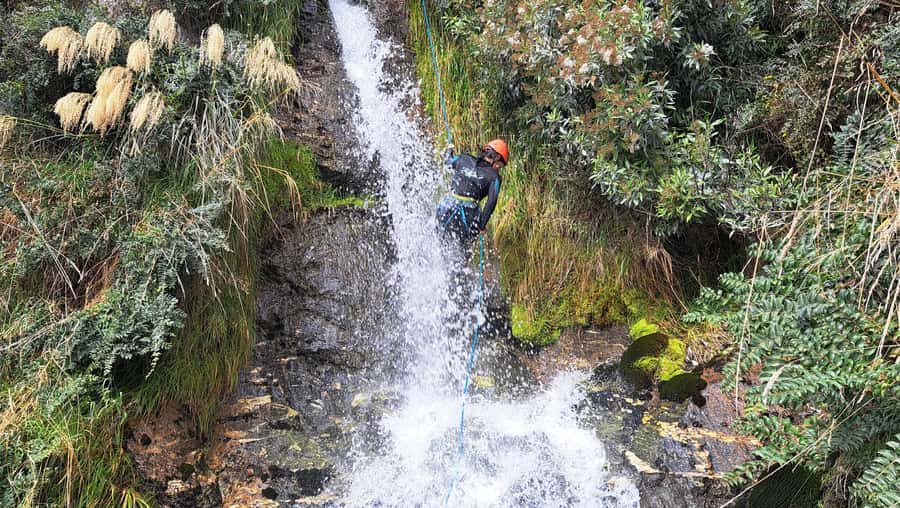
Cable climbs, then six waterfall rappels. This Wanaka tour blends beginner-friendly rope skills with wild Twin Falls canyoning, and you also get mountain and lake views throughout. I like the small-group setup, because it keeps the pace human and the instruction focused from start to finish.
Here is the catch: this is not a relaxed stroll. You need to be active for up to 5 hours on uneven ground, on steep and sometimes exposed sections with a head for heights.
Key points to know before you go

- Level 1 cable climb first: you start with an easy introduction to climbing technique before you switch to canyoning
- Twin Falls up close: you abseil and rappel right-hand Twin Falls sections for a very personal view of the falls
- Ropes and training from an experienced guide: you learn climbing and descent skills on the day, with safety support the whole time
- Six waterfall drops: the canyoning portion includes multiple rappels, so you get repeated adrenaline moments
- Small group size: limited to 6 participants, and that usually keeps things flexible
- You finish with a wire crossing lower: the tour wraps with guided descent and a short walk back to the base
Twin Falls Waterfall Climb and Canyon: What the combo tour really delivers

If you like the idea of doing two adventure skills in one morning, this is a smart way to spend time in Wanaka. The tour is built around Twin Falls, and it is structured so you do not just watch the scenery. You climb up first, then you descend into it. That change in direction is what makes the day feel like two different adventures stitched together.
I love how the experience is hands-on without being reckless. You get training and safety equipment, and the guide stays with you for the whole route. You are also not stuck only on the waterfall views. The day includes time in native bush with mountain and lake views, so you get that New Zealand outdoors feel even when you are not on ropes.
The other big positive is how this tour is framed for “adventurous, fit beginners.” You do not need prior abseiling or climbing experience. What you do need is basic fitness and comfort moving over rough, steep terrain. If you bring that mindset, the tour can feel like a big win for your confidence as much as for the adrenaline.
Price and value: Why $196 feels fair for a gear-and-guide day
At $196 per person for a 6-hour experience, you are paying for three things that matter on a rope-based tour: trained instruction, safety gear, and the time on the water-and-rock environment.
Here is what you get included:
- Experienced professional guide
- Safety training and safety equipment
- Wetsuit and wetsuit socks
- Lunch
That adds up. Rope skills and waterfall descents are not something you want to “figure out later,” and you do not just show up with sneakers and hope for the best. You are paying for someone to teach you how to move correctly and safely, then support you while you do it.
Also, small group size matters for value. With limited spots, you get more attention and fewer delays. One review mentioned a total group size of 3, which allowed their pace to stay flexible and made it easier to take small detours for extra fun. You should not count on it being that small, but the structure is designed to keep the experience personal rather than assembly-line.
So, is it expensive? Compared to a typical Wanaka waterfall walk, yes. Compared to other guided active tours that include gear and professional rope support, it feels more like paying for the real work.
Getting there near Wanaka and the locked farm gate meeting point

The meeting point is specific, and it helps to read it slowly. From Wanaka town, drive west along the Wanaka-Mt Aspiring Road following the lake. Keep heading toward Treble Cone Ski Field and Mt Aspiring National Park.
After about 20 minutes, you will reach a cattle stop. Pull out immediately to the left in front of two massive waterfalls. You are looking for a locked farm gate with the local partner’s sign. Meet at this gate in front of the waterfalls.
Two practical notes:
- If you reach the ski field road or a gravel road, you have gone too far.
- Give yourself a bit of buffer time. The directions are straightforward, but the turning point is easy to miss if you are rushing.
The day’s flow, from Level 1 cable climb to canyon descents

This tour is about 6 hours total, and you will be active up to 5 hours. Translation: you will have some walking and transitions, but most of the time is spent moving, climbing, learning, and descending. If you prefer a slow schedule, this might feel busy. If you want a full, physical half-day, it fits.
The structure is:
- Level 1 cable climb to start
- Cliffside trail to the waterfall area
- Abseiling and rappelling on the right-hand Twin Falls section
- Guided lower on the wire crossing
- Short walk back to the base
That progression is clever. You learn how to grip, balance, and trust the system on the easier first stage. Then you move to the water and rope descents, where your skills matter more.
Level 1 cable climb: your first rope skills, with training built in

The tour begins with a Level 1 cable climb. “Level 1” is your clue that this is meant as an entry point, not a test. You will learn the basics of climbing technique and rope handling, and you have the guide there to keep you on the right track.
What I like about starting this way is that it gives you a rhythm early. You are not thrown into the steep, wet part first. You build comfort with exposure, movement on uneven terrain, and the simple discipline of following instructions. That matters because the canyoning portion involves repeated descents and controlled movement.
Expect the cable climb to feel physical. Even at an entry level, you are using upper-body strength and core stability to keep your balance. It is not a long mountaineering grind, but it is enough to get your body warmed up for the wet, adrenaline-heavy parts later.
Cliffside trail to Twin Falls: views and the reality of uneven ground

After the cable climb, you join a cliffside trail to the next-door waterfall. This is where you get that true outdoors immersion. You are moving through native bush and getting mountain and lake views as you transition to the main waterfall section.
This trail segment also serves a practical purpose. It’s a live preview of what the route demands:
- walking on uneven terrain
- moving through steep sections
- being active while staying attentive
If you are comfortable with uneven ground and you can keep your focus when it feels exposed, you will likely find this part manageable. If you tend to freeze when footing gets sketchy, this is the moment where you will feel that difference.
Abseiling and rappelling right-hand Twin Falls: getting wet up close
Now for the part you came for: getting up close and personal with Twin Falls. On the right-hand section, you abseil or rappel the lower section, which means you are descending with ropes while the waterfall is right there with you.
This is where the “no prior experience needed” promise becomes real. The guide supports you and you get taught how to climb and descend ropes. You are not guessing. You are learning while doing.
The tour also includes rappelling down 6 waterfalls. That is a big deal. It suggests multiple rope descents, rather than a single short abseil and then a quick exit. So you get repeated adrenaline spikes, plus repeated opportunities to practice control and technique.
What that means for your body: expect wet conditions, cooler air, and the physical effort of holding position during descents. Wetsuit and wetsuit socks are included, which helps a lot with comfort, but you should still prepare for water and spray.
Why this is so memorable: you are not just watching falls from a safe viewpoint. You are inside the environment. The sound gets louder. The scale becomes real. And every descent teaches your brain that you can handle heights and movement with the right setup and support.
The wire crossing lower and the walk back to base

As you finish, the tour includes a guided lower on a wire crossing and then a short walk back to the base. This final section matters because it helps you transition out of the adrenaline mode.
I like that the last big action is still guided. By the time you reach the wire crossing, you have already learned climbing and descent basics and already handled the wet waterfall environment. The guide can focus on finishing technique and keeping the day smooth, rather than teaching everything from scratch.
After that, the short walk back is your chance to shake out your legs, dry off a little, and get your bearings. If you are the type who feels proud after a challenge, this is usually when that pride kicks in, because the hardest moments are done.
What to bring (and what they handle): your wet day checklist

Good news: you are not stuck buying a bunch of specialty gear. The tour includes wetsuit and wetsuit socks, plus safety equipment and training.
You should bring:
- Swimwear
- Towel
- Hiking shoes
- Water
Optional, but useful if you want photos: a waterproof phone or camera case.
Important footwear reality check: sturdy shoes to get wet are what you want. If you bring your best dry-day shoes, you will likely regret it. The tour involves getting wet and moving around in slippery areas, so traction and willingness to get waterlogged matters.
Also plan your day around comfort. Since lunch is included, you just need water and the basics. Your towel becomes your “I survived” tool at the end.
Who this tour fits: adventurous, fit beginners with a head for heights
This tour is suitable for adventurous, fit beginners. You must be able to walk on uneven terrain, move through steep exposed cliffs, and stay active for up to 5 hours.
You also need:
- a head for heights
- ability to handle steep, exposed sections
- comfort following instructions on ropes
And there are clear height and weight limits:
- Not suitable for children under 14
- Not suitable under 120 cm (3 ft 9 in)
- Not suitable under 40 kg (88 lbs)
- Not suitable over 100 kg (220 lbs)
These boundaries are there for safety and gear fit. If you fall within them and you can move confidently on rough ground, this tour is a great way to learn. If you are worried about exposure, talk yourself honestly through your comfort level. Cable climbing and rope descents are not the same as a viewpoint walk.
How safety and small-group teaching actually change the experience
The biggest praise from a recent verified booking was that the trip felt thrilling but safe at all times. That is exactly what you want to hear about a waterfall rope tour. The second big theme was small-group pacing, with one group of 3 people going at their own pace and even taking detours for extra fun.
Now, you cannot guarantee group size will be 3. What you can count on is that the tour is limited to 6 participants. Smaller groups generally mean:
- more time with the guide during training moments
- fewer bottlenecks while setting up for descents
- more flexibility if you are feeling cautious or excited
Because the tour includes instruction for climbing and abseiling, you are not just dropped onto the rope. You learn movement skills on site, then apply them on waterfalls. That combination is what turns “dangerous stuff” into “I can do this.”
Should you book the Wanaka Waterfall Climb and Canyon Tour?
I’d book it if you want a real action day in Wanaka, not a passive sightseeing loop. It is especially worth it if you:
- want to learn rope skills as you go
- are comfortable with wet conditions and moving on rough terrain
- have a head for heights and can follow safety instructions calmly
- like the idea of repeated waterfall descents, not one quick photo moment
I would skip it if:
- you want low-effort sightseeing
- exposed terrain makes you tense
- you do not meet the height and weight requirements
- you are not able to be active for up to 5 hours
If you meet the fitness needs and you are excited by the idea of learning and then rappelling down six waterfalls, this is one of the more complete adventure formats around Wanaka. You get views, training, and the payoff of being close to Twin Falls in a way that most walks never can.
FAQ
Is this tour suitable for a beginner?
Yes. No previous abseiling or climbing experience is required. The tour is suitable for adventurous, fit beginners, as long as you can walk on uneven terrain and stay active for up to 5 hours.
What is the total duration of the tour?
The tour runs for 6 hours in total.
How long do I need to be active during the experience?
You will be active for up to 5 hours.
What do I need to be able to do physically?
You need to be able to walk on uneven terrain, move through steep exposed cliffs, and have a head for heights. Good fitness is required.
What is included in the price?
The tour includes an experienced professional guide, safety training, safety equipment, wetsuit, wetsuit socks, and lunch.
Do I need to bring my own lunch or towel?
Lunch is included. You do need to bring a towel.
What should I wear and bring for the wet parts?
Bring swimwear, hiking shoes to get wet, and water. A waterproof phone or camera case is optional.
How big is the group?
The tour is a small group limited to 6 participants.
Where do I meet for the tour?
Meet at a locked farm gate in front of two massive waterfalls. Follow the Wanaka-Mt Aspiring Road west, and after about 20 minutes look for the cattle stop and pull out immediately to the left at the gate.
Is there a cancellation policy?
Free cancellation is available up to 24 hours in advance for a full refund.
More Tour Reviews in Wanaka
- Wildwire Wanaka- Level 2 (4 Hours)
★ 5.0 · 467 reviews - Bike the Wanaka and Hawea Trails
★ 5.0 · 346 reviews - Lake Wanaka Happy Hour Cruise
★ 4.6 · 313 reviews - Small Group Jet Boat Adventure on the Clutha River from Wanaka
★ 5.0 · 302 reviews
Rope Work in the Gorges
- Wildwire Wanaka- Level 2 (4 Hours)
★ 5.0 · 467 reviews - Wildwire Wanaka- Level 1 (2 Hours)
★ 5.0 · 112 reviews - Wanaka: 2-Hour Beginner Waterfall Cable Climb
★ 4.9 · 108 reviews - Wanaka: 4-Hour Intermediate Waterfall Cable Climb
★ 5.0 · 66 reviews
Over the Crown Range to Wanaka
- Wildwire Wanaka- Level 2 (4 Hours)
★ 5.0 · 467 reviews - Bike the Wanaka and Hawea Trails
★ 5.0 · 346 reviews - Lake Wanaka Happy Hour Cruise
★ 4.6 · 313 reviews - Small Group Jet Boat Adventure on the Clutha River from Wanaka
★ 5.0 · 302 reviews
Lake Wanaka Adventures, side by side.
 ★ 5.0Wildwire Wanaka- Level 2 (4 Hours)From $232467 reviews
 ★ 5.0Bike the Wanaka and Hawea TrailsFrom $80346 reviews
 ★ 4.6Lake Wanaka Happy Hour CruiseFrom $38313 reviews
 ★ 5.0Small Group Jet Boat Adventure on the Clutha River from WanakaFrom $98302 reviews
 ★ 4.8Wanaka: Water Taxi & Mou Waho Island TourFrom $83299 reviews
 ★ 5.0Jet Boat and Wilderness Walk Tour from WanakaFrom $215259 reviews
 ★ 4.8Wanaka: Tandem Skydive ExperienceFrom $214252 reviews
 ★ 5.0Arrowtown and Wanaka Highlights Tour from QueenstownFrom $129252 reviews
Also filed under