
REVIEW · LAKE TEKAPO AND LAKE PUKAKI TRIPS
Lake Tekapo: Indoor Māori Cultural Astronomy Experience
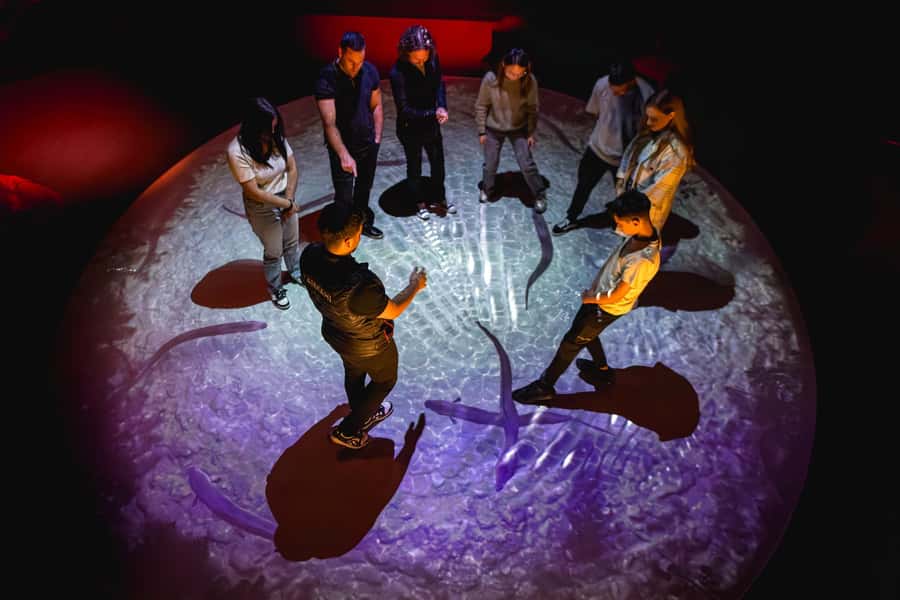
You can learn the night sky in daylight. In Lake Tekapo, this indoor Māori cultural astronomy experience pairs storytelling, interactive zones, and a close-up look at a restored Victorian telescope.
What I like most is the blend of Māori astronomy and scientific perspective within one 45 minute session. I also love that it is built for weather, so you still get a guided stargazing style experience without waiting for perfect conditions.
One thing to plan for: the experience is theatrical and can get noisy near young kids, and some visitors find hearing the guide challenging if accents or background noise get in the way.
Quick hits before you go

- Māori astronomy through four interactive zones, including navigation ideas tied to constellations and ocean currents
- Up close with the restored 125-year-old Brashear Victorian telescope
- Indoor, all-weather format in the Aoraki Mackenzie International Dark Sky Reserve area
- Theatrical lighting and sound that helps you follow the story
- English and Chinese guided narration
- Wheelchair accessible, purpose-built for a range of visitors
Daytime Māori astronomy inside the Aoraki Mackenzie Dark Sky setting

Lake Tekapo is already famous for dark skies, so it feels a little funny at first that this experience happens indoors. Then it clicks. You are not being asked to chase the night or squint through weather. Instead, you get a guided, sensory show that helps you understand what you would otherwise struggle to notice in the sky.
The core promise is cultural astronomy. You are guided through how Māori knowledge connects people, stars, and navigation, then you layer in a scientific thread about the Milky Way and the wider universe. The result is not just astronomy facts. It is a way of seeing, where the night sky becomes a map and a story at the same time.
And because it runs in a purpose-built experience zone, it works across the typical Lake Tekapo reality: wind, cloud, and sudden weather changes. You still get a properly guided experience with staged lighting and sound, which also helps keep the pace friendly for mixed ages.
Where you meet and how to arrive without stress
You meet at 1 Motuariki Lane, Lake Tekapo, about 100 meters from Four Square Supermarket. There is no hotel pickup or drop-off included, so you will want to plan on walking or driving yourself.
This matters because you only have 45 minutes. If you arrive late, you will feel it fast. Aim to get there a bit early, settle in, and give your ears and eyes time to adjust once the show starts. It is also a good idea to choose a seat where you can hear clearly, especially if you know you get distracted by background noise.
If you are traveling with accessibility needs, good news: it is wheelchair accessible. Since it is indoors and purpose-built, you are not trying to manage uneven ground in the dark just to get to your seat.
Four interactive zones: how the story teaches you to look

The 45 minute tour is built as an interactive journey through four zones. You are not watching a slide deck and waiting politely. Each zone is designed to bring the sky down to something you can understand and use.
Zone one: Māori astronomy as a wayfinding language
The experience starts by framing the idea that the sky is not just decoration. Māori astronomy is presented as knowledge connected to life and movement. You learn about the connection between the night sky and how people navigated, then the show starts guiding your attention toward patterns rather than random points of light.
If you enjoy hands-on learning, this is where the value hits. You are encouraged to think like an observer, not just a spectator. That shift is what makes later parts of the show stick.
Zone two: constellations and ocean currents for navigation
Next, the tour focuses on how constellations and ocean currents were used for navigation. This is a particularly strong concept because it gives you a reason to pay attention even when the sky is not bright or dramatic. You are learning that movement across land and sea can be supported by what is overhead.
Even if you do not memorize any star names, you still walk away with the main idea: the night sky can act like a reference system. That makes the astronomy feel practical.
Zone three: star clusters and what they mean
Then the show turns toward star clusters and their significance. Clusters can be harder to spot than bright single stars, especially if you are used to seeing the sky only in vague ways. Here, you get guided context for why these groups mattered, and how grouping changes what you notice.
This zone is often where people realize they were looking at the sky the wrong way before. Instead of scanning for the brightest points, you start noticing structure.
Zone four: mythology in the stars plus a scientific thread
The final zone brings in mythology in the stars, so the cultural meaning has room to breathe. After that, the experience also includes science based narrative elements, including a story about how living beings came to be and a focus on the depths of the Milky Way.
This mixed approach is not random. The show uses the cultural story to help you see meaning, then it uses scientific explanation to help you understand what you are seeing in cosmic terms. If you like your learning to have both heart and facts, you will likely enjoy this structure.
The Brashear telescope moment, and why it matters

One of the biggest draws is the restored 125-year-old historic Brashear Victorian-era telescope. You do not just hear about old telescopes as museum pieces. You get to get up and close with it during the tour.
Why this feels special in practice: it gives your eyes a real reference point for the idea of astronomy technology. Even if you have seen telescopes before, a Victorian design adds personality. And because the entire experience is focused on making the sky easier to understand, the telescope fits the story rather than feeling like an unrelated add-on.
Also, since the tour is indoors, you are not stuck dealing with cloud cover or wind during a telescope segment. That makes it a more consistent experience, especially in the colder parts of the year when Lake Tekapo can be brisk even in daylight.
Theatrical lighting and sound, done with a purpose

This tour uses theatrical lighting and sound. That is not just for drama. It helps you follow transitions between zones and ideas. In a cultural astronomy experience, attention is the tool. Lighting and sound guide where you look, when you listen, and how you connect each part of the story.
The indoor format also helps people who might not be comfortable standing outside for long stretches. In 45 minutes, you can stay engaged, absorb the concepts, and still move on with your Lake Tekapo day plan.
One practical caution comes straight from real-world viewing dynamics. If your hearing is sensitive, pick your seat carefully and consider positioning yourself away from the noisiest part of the room. The tour is family friendly, but young kids can make it harder to catch every word when accents or background sound come into play.
Languages and guiding style: English and Chinese support

The tour offers a live guide in English and Chinese. That matters if you want your learning to land clearly instead of translating in your head. If you are comfortable in either language, you will probably enjoy the experience more because you can focus on the sky concepts instead of catching up on the narration.
If you rely on hearing every detail, do not assume the room will be perfectly quiet. The experience is interactive and staged, and family groups may be present. Your best move is to sit where sound reaches you and keep expectations realistic for a short, theatrical session.
Price and value: is $35 for 45 minutes worth it?

At $35 per person for a 45 minute guided experience, the main question is what you get for that time. Here is the value case, plain and simple.
You are paying for:
- a guided tour through four interactive zones
- live storytelling that connects Māori astronomy with navigation, star clusters, mythology, and a science based perspective
- access to a close-up look at the restored 125-year-old Brashear telescope
- theatrical lighting and sound that makes the concepts easier to follow
That is a lot packed into under an hour, and the indoor format is part of the value. You are not risking your time on weather, and you are not waiting for a night slot that might never line up with your schedule. If you are short on time in Lake Tekapo or traveling with kids, this kind of predictable, guided structure is often worth it.
If you already know a lot about astronomy and you want long telescope time or a deep technical lecture, you might find 45 minutes a bit tight. But for most people, the payoff is clarity. You leave with a new way to look at the sky, even if you do not turn into an amateur astronomer overnight.
Who should book this in Lake Tekapo?

This experience is a strong fit if you want:
- a daytime stargazing style experience that works in bad weather
- Māori cultural astronomy explained in an interactive way
- a guided visit that is easier than figuring out the sky on your own
- a close-up look at a historic Victorian telescope, without the fuss of night viewing
It is also a good choice for mixed groups, since it is family friendly and wheelchair accessible.
If you are traveling as a solo adult who loves stories and wants a cultural angle on astronomy, you will likely enjoy the structure. If you are traveling with someone who is less interested in science, the Māori storytelling thread can help keep attention.
Should you book the Lake Tekapo indoor Māori astronomy tour?

I think you should book it if you are visiting Lake Tekapo and want your time to count. For $35, you get guided learning, interactive zones, and the Brashear telescope close-up, all in a weather-proof indoor setting. That combination is hard to beat when you want both meaning and a concrete new way to notice the night sky later.
I would hesitate only if you know you struggle to follow spoken narration in noisy rooms or you need long, hands-on telescope time. In that case, plan your seating carefully and manage your expectations for a 45 minute staged show.
If you are open to learning how different cultures read the sky, this is one of the most practical ways to do it in Lake Tekapo.
FAQ
How long is the Lake Tekapo indoor Māori cultural astronomy experience?
It lasts 45 minutes.
How much does it cost?
The price is $35 per person.
Where is the meeting point?
The meeting point is 1 Motuariki Lane, Lake Tekapo 7999, about 100 meters from the Four Square Supermarket.
Is this tour indoors?
Yes. It is an indoor, purpose-built experience zone.
Does it run in all weather?
Yes. Tours operate in all weather conditions.
What languages are available for the live guide?
The live tour guide is available in English and Chinese.
Is it wheelchair accessible?
Yes, the experience is wheelchair accessible.
What is included in the ticket price?
A 45-minute guided tour through four zones, delivered by live guides, plus the interactive Māori astronomy narrative and a close-up viewing of the restored 125-year-old Brashear telescope.
Is food or hotel pickup included?
No. Food and drinks are not included, and there is no hotel pickup or drop-off.
More Tour Reviews in Lake Tekapo
- Lake Tekapo: Alpine Stargazing Experience with a Guide
★ 4.5 · 626 reviews - Lake Tekapo: Stargazing Experience
★ 4.9 · 607 reviews - Tekapo Shuttle: Mt Cook Day Tour via Pukaki & Tasman Lake
★ 4.8 · 307 reviews - Chameleon Stargazing Shared Tour
★ 5.0 · 181 reviews
When the Sky Clears
- Lake Tekapo: Alpine Stargazing Experience with a Guide
★ 4.5 · 626 reviews - Lake Tekapo: Stargazing Experience
★ 4.9 · 607 reviews - Chameleon Stargazing Shared Tour
★ 5.0 · 181 reviews - Lake Tekapo: Mountaintop Stargazing at Mount John Summit
★ 4.5 · 176 reviews
That Mackenzie Blue
- Lake Tekapo: Alpine Stargazing Experience with a Guide
★ 4.5 · 626 reviews - Lake Tekapo: Stargazing Experience
★ 4.9 · 607 reviews - Tekapo Shuttle: Mt Cook Day Tour via Pukaki & Tasman Lake
★ 4.8 · 307 reviews - Lake Tekapo: Mountaintop Stargazing at Mount John Summit
★ 4.5 · 176 reviews
Lake Tekapo and Lake Pukaki Trips, side by side.
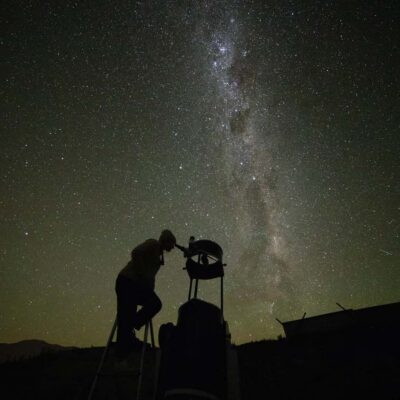 ★ 4.5Lake Tekapo: Alpine Stargazing Experience with a GuideFrom $59626 reviews
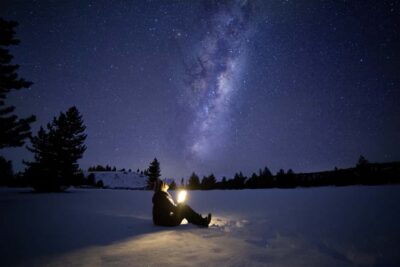 ★ 4.9Lake Tekapo: Stargazing ExperienceFrom $71607 reviews
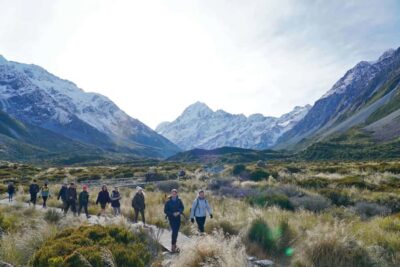 ★ 4.8Tekapo Shuttle: Mt Cook Day Tour via Pukaki & Tasman LakeFrom $89307 reviews
 ★ 4.5Lake Tekapo: Mountaintop Stargazing at Mount John SummitFrom $130176 reviews
 ★ 4.6From Christchurch: Queenstown via Tekapo & Mt Cook Day TripFrom $238167 reviews
 ★ 4.5Mount John Observatory Stargazing Experience, TekapoFrom $139160 reviews
 ★ 4.5Queenstown to Christchurch One-Way Tour via Mt Cook & Lake TekapoFrom $235134 reviews
 ★ 4.2Lake Tekapo: Single Day Multiple Entry Pass for Hot PoolsFrom $23129 reviews